Trusted Texas City truck accident attorneys with over a decade of trial experience pursuing motor carriers and corporate defendants in commercial crash cases.
Greenberg Streich Injury Lawyers represents victims of commercial vehicle crashes throughout Galveston County and along the upper Gulf Coast. To consult with a Texas City, TX truck accident lawyer, please reach out for a free, confidential review
Truck Accident Lawyer Texas City, TX
When a commercial truck is involved, the at-fault driver is rarely the only party with exposure. The motor carrier (the company operating the truck) faces independent claims under the legal principles of negligent hiring, training, supervision, and retention. The cargo broker may be exposed if it selects an unsafe carrier. The lessor of the equipment, the maintenance contractor, and even the shipper may all face claims depending on the facts. Identifying every potentially responsible defendant in the first 30 days is one of the most consequential tasks in a commercial vehicle case.
Federal regulations are also important. Most commercial trucks operating in interstate commerce are subject to the Federal Motor Carrier Safety Administration Regulations, which impose detailed requirements on driver qualifications, hours of service, vehicle inspections, and recordkeeping. Violations of these regulations can support per-se negligence arguments and, in many cases, exemplary damages. Our truck accident attorneys in Texas City develop each file with the regulatory framework in mind from the outset.
Types of Truck Accident Cases We Handle in Texas City
Commercial vehicle crashes along the upper Gulf Coast take many forms. Greenberg Streich Injury Lawyers handles each.
- Delivery truck collisions. Local and regional delivery vehicles operating on tight schedules.
- Box truck and straight truck crashes. Vehicles that fall under FMCSA jurisdiction at certain weight thresholds, but are sometimes operated by drivers without a full CDL.
- Dump truck and construction vehicle wrecks. Heavy off-highway and on-highway construction equipment that often involves overloaded conditions and reduced braking capacity.
- Garbage and waste collection truck crashes. Municipal and private waste hauler vehicles that operate on residential streets at unusual hours and with frequent stops.
- Tow truck and recovery vehicle incidents. Collisions involving tow operators, including secondary crashes when a truck is parked or maneuvering on the shoulder.
- Utility and service truck collisions. Telecommunications, electrical, plumbing, and HVAC service vehicles, often operated by employees acting in the course and scope of employment.
- Cement mixer and concrete truck crashes. Top-heavy vehicles with distinct rollover risk and significant kinetic energy in a collision.
- Refrigerated truck and reefer wrecks. Cold-chain transportation vehicles, often operating under demanding scheduling pressure.
- Flatbed and oversize load incidents. Cases involving load securement failures, debris in the roadway, and bridge or overpass strikes.
- Tanker truck collisions. Liquid cargo vehicles with elevated rollover risk and, in some cases, hazardous materials regulatory exposure.
- Hazardous materials transport incidents. Cases that introduce additional federal regulatory frameworks and often involve industry-specific defendants.
- Drunk driving accidents. Impaired commercial drivers face heightened federal scrutiny in addition to state law.
- Bus accidents. Commercial passenger vehicles share much of the FMCSA framework that governs property-carrying trucks.
- Workplace injuries. Truck drivers injured on the job face overlapping workers’ compensation and third-party claim issues.
- Wrongful death. When a fatal commercial truck crash takes the life of a loved one, surviving family members may pursue a claim under Chapter 71 of the Texas Civil Practice and Remedies Code to recover for lost financial support, companionship, and the emotional toll of the loss.
Why Choose Greenberg Streich Injury Lawyers for a Truck Accident in Texas City, TX?
Carrier-Side Defense Background
Mike Streich spent the early phase of his career on the defense side, including substantial work for major insurers and corporate defendants. He has reviewed driver qualification files, audited carrier safety programs, and watched companies attempt to control the narrative in the days immediately after a fatal crash. As a personal injury lawyer in Texas City, TX Mike applies that knowledge to crash victims and surviving families.
Matt Greenberg is licensed in Texas, Louisiana, and Arizona, holds a J.D. from Baylor Law School, and has earned recognition from Super Lawyers, Lawdragon, and the National Trial Lawyers. He is a member of the American Association for Justice and the Texas Trial Lawyers Association.
Verdicts and Settlements
Our attorneys have recovered over $400 million for injured clients, including a $35 million trucking verdict that ranks among the firm’s largest commercial vehicle outcomes. Truck cases reward early preservation of evidence, aggressive corporate discovery, and a willingness to take the matter through trial.
How Our Firm Operates
Our Texas City truck accident attorneys handle these matters on contingency. There is no fee unless we recover. Free consultations are confidential and available 24/7.
Understanding Truck Accident Cases
Damages, Liability, and Compensation for Truck Accident Cases
Recoverable damages in a Texas commercial vehicle case fall into well-developed categories. The presentation of each at trial drives settlement value during negotiations.
- Past and future medical care. Trauma surgery, orthopedic care, neurosurgical care, rehabilitation, and any ongoing treatment the treating physician projects.
- Lost wages and lost earning capacity. Time missed during recovery and any permanent reduction in the ability to perform the work the crash victim performed before the wreck.
- Pain and suffering. Physical pain experienced from the crash through trial and into the future, supported by medical records and the patient’s own testimony.
- Mental anguish. Anxiety, depression, post-traumatic stress, and other emotional consequences frequently accompany serious commercial vehicle crash injuries.
- Physical impairment and disfigurement. Permanent loss of bodily function and visible scarring or deformity that follow a serious crash.
- Loss of consortium. A spouse’s claim for loss of household services and the relational consequences of a serious injury.
- Property damage. Vehicle repair or replacement, plus diminished value where applicable.
- Exemplary damages. Available where the carrier or driver’s conduct rises to gross negligence, including documented patterns of regulatory violations.
Liability in a commercial vehicle case is allocated under Section 33.001 of the Texas Civil Practice and Remedies Code. A jury assigns percentages of fault among all responsible parties.
Important Aspects in Your Truck Accident Case
A handful of issues drive the value of nearly every commercial vehicle claim.
- Carrier identification. Every commercial vehicle in interstate commerce has a USDOT number. Identifying the motor carrier and pulling its FMCSA Company Snapshot in the first 24 hours is foundational.
- Spoliation letters. Electronic logging device data, dashcam footage, and onboard telematics must be preserved through written demand before the carrier’s standard retention windows expire.
- Driver qualification file. The driver’s application, motor vehicle records, training documents, and disciplinary history are all required to be on file under FMCSA rules and routinely reveal issues that drive the case.
- Post-crash drug and alcohol testing. Federal regulations require carriers to conduct testing in qualifying crashes. Compliance (or lack of it) becomes a critical issue.
- Forum strategy. Where the case is filed often drives settlement value; different counties tend to produce more favorable outcomes for plaintiffs than others.
Truck Accident Case Timeline
Commercial vehicle cases tend to follow a recognizable arc, though the timeline can vary considerably depending on the complexity of the facts, the number of parties involved, and the degree to which the motor carrier and its insurers are willing to cooperate.
- Investigation and preservation. Scene documentation, spoliation letters, and identification of all potentially responsible defendants in the first 30 days.
- Medical treatment. Surgery, rehabilitation, and ongoing follow-up that often extend for a year or more.
- Liability development. FMCSA records review, driver qualification file analysis, and electronic data preservation.
- Pre-suit demand. A formal demand to the carrier and its primary insurer once damages are documented.
- Lawsuit filing. State district court or federal court, depending on parties and strategy.
- Discovery, depositions, mediation, and trial. Most commercial vehicle cases settle, but only after defendants conclude the matter is genuinely headed to verdict.
What to Bring to Your Truck Accident Consultation
Bring whatever you have. Documents drive the first meeting.
- The crash report, photographs of the scene, and any video taken by witnesses or nearby businesses.
- Hospital and emergency room records, ambulance bills, and any follow-up care documentation.
- Insurance information for every party, including your own auto policy declarations page.
- Names and contact information for witnesses, passengers, and first responders.
- Anything identifying the truck, including USDOT number, MC number, company name, trailer markings, and driver name.
The consultation will cover what occurred, the responsible parties, the regulatory framework, and your next steps.
Texas Legal Resources for Truck Accident
Several state and federal resources govern commercial vehicle operations in Texas.
- FMCSA Company Snapshot. The agency maintains a searchable FMCSA Company Snapshot database providing a concise record of any motor carrier’s identification, size, safety rating, inspection summary, and crash history.
- Federal CDL standards. Driver licensing, training, and disqualification standards for commercial drivers are codified at 49 CFR Part 383.
- Texas crash reporting. Driver and law enforcement duties at and after a Texas crash are governed by Chapter 550 of the Texas Transportation Code.
- Statute of limitations. Texas commercial vehicle injury claims must generally be filed within two years under Section 16.003 of the Texas Civil Practice and Remedies Code.
- Local courts. Truck cases involving Texas City are typically filed in the Galveston County district court.
These resources are starting points only.
Reach Out to Greenberg Streich Injury Lawyers to Schedule a Consultation
When you need serious legal help to get treated fairly in the claims process, turn to our Texas City truck accident lawyer. Greenberg Streich Injury Lawyers offer free, confidential consultations to crash victims and their families. We work on a contingency basis. Contact us today to learn your rights under Texas law.
Truck Accident Statistics in Texas City
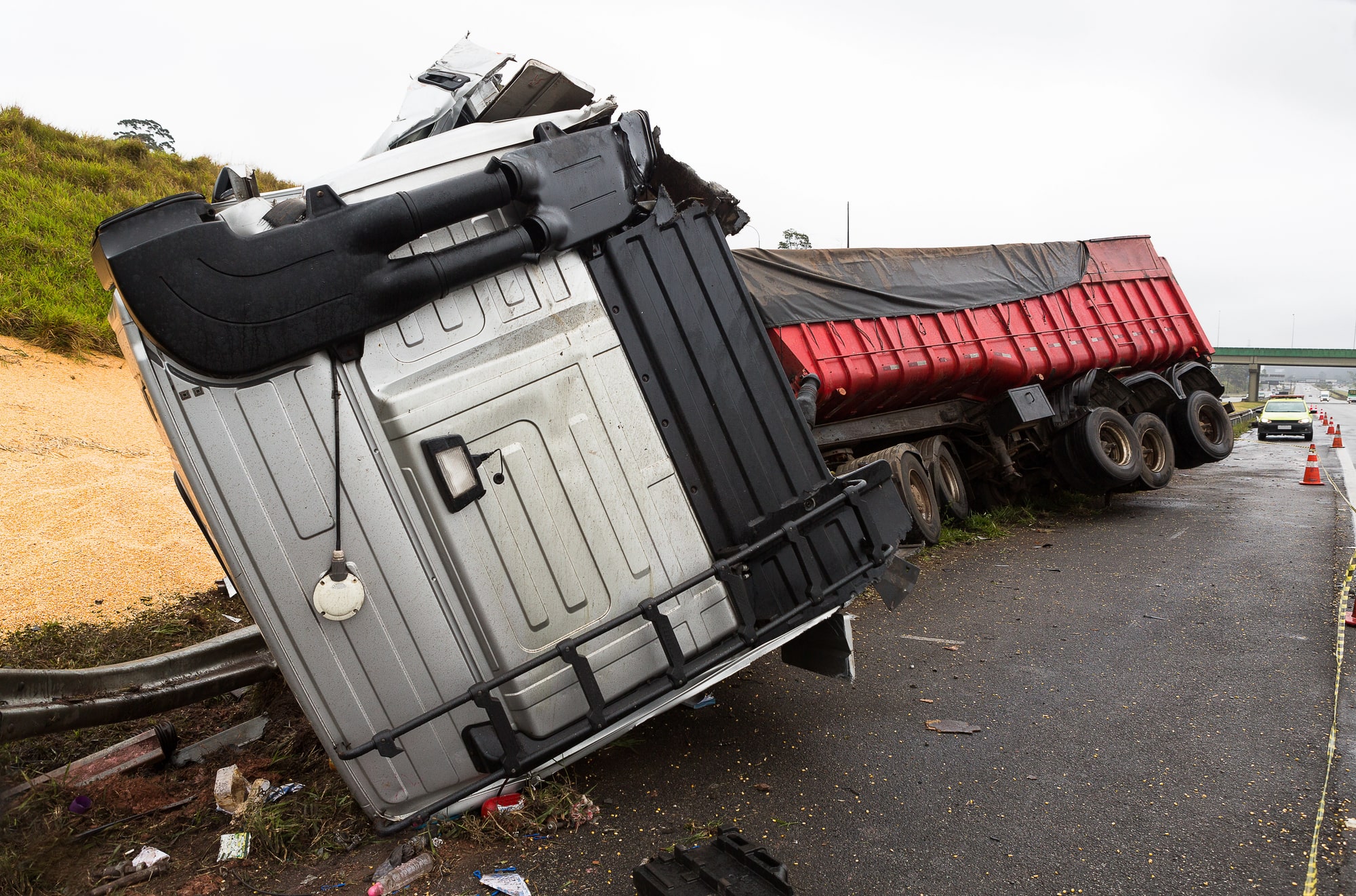 Texas City runs on trucks. The refineries, the port, and the industrial corridor pull thousands of commercial rigs onto local roads, and when one of them causes a crash, the damage is rarely minor. The Federal Motor Carrier Safety Administration tracks the scale of the problem through its large truck and bus crash facts, and its crash statistics tool breaks the data down by state and configuration. In Texas, TxDOT crash data recorded 4,150 traffic deaths in 2024, with commercial vehicles involved in a significant share of the most severe wrecks. A loaded eighteen-wheeler can weigh twenty to thirty times what a passenger car does, and physics does the rest. When a trucking company or driver’s negligence causes a wreck in Texas City, TX, our truck accident attorneys go after everyone responsible.
Common Causes of Truck Accidents
Most serious truck wrecks are not freak events. They trace to decisions, by a driver, a carrier, or a maintenance operation, that put profit or schedule ahead of safety. These are the causes our Texas City truck accident lawyers see again and again.
- Driver fatigue. Tight delivery windows push drivers past safe limits. Federal hours-of-service rules exist for a reason, and when a carrier pressures a driver to violate them, exhaustion behind the wheel becomes deadly.
- Speeding and aggressive driving. A truck needs far more distance to stop than a car. Speeding, tailgating, and unsafe lane changes turn a manageable situation into a catastrophic one in seconds.
- Distracted driving. Phones, dispatch devices, and in-cab technology pull a driver’s attention off the road. At highway speeds, a few seconds of distraction covers the length of a football field.
- Improper loading. Overloaded trailers, unbalanced cargo, and unsecured loads cause rollovers, jackknifes, and spilled freight. Loading errors often point back to a shipper or a loading crew, not just the driver.
- Poor maintenance. Bald tires, failing brakes, and worn components cause failures at the worst possible moment. Carriers are required to inspect and maintain their fleets, and maintenance records tell the story when they do not.
- Inadequate training and hiring. Putting an inexperienced or unqualified driver behind the wheel of an eighty-thousand-pound vehicle is a choice, and it is one that carriers make to keep trucks rolling.
- Impairment. Alcohol, drugs, and certain medications slow reaction time and judgment. Commercial drivers are held to strict standards, and violations can support a strong claim.
- Blind spots and unsafe maneuvers. Large trucks have significant blind zones. Wide turns, unsafe merges, and backing errors cause devastating collisions with cars the driver never saw.
- Broker and shipper pressure. Sometimes fault reaches beyond the cab. A freight broker or shipper that demands unrealistic schedules, or that hires a cheap and unsafe carrier to cut costs, can share responsibility for the crash that follows.
Trucking companies deploy investigators and defense lawyers within hours of a serious crash. Identifying the true cause fast, and preserving logs, black-box data, and maintenance files before they disappear, is what levels the field.
Texas City Truck Accident Lawyer FAQs
What does a Texas City truck accident lawyer cost?
We handle truck accident cases on a contingency fee, so there is nothing to pay up front and no hourly billing while you recover. Our fee comes only from a recovery we secure, and if we win nothing, you owe no attorney fee. Trucking companies have deep resources and aggressive defense teams, and this arrangement lets you fight back without financial risk.
Is the consultation free?
Yes. Your first meeting with our Texas City truck accident attorneys is free and confidential. We will review how the wreck happened, who may be responsible, and what your injuries mean for a claim, then give you a straight answer. There is no obligation to hire us after that conversation.
How long do I have to file a truck accident claim in Texas?
Most Texas truck accident claims carry a two-year deadline under Texas law. But waiting even weeks can cost you. Trucking companies move to secure evidence and limit their exposure immediately, so the sooner a lawyer sends a preservation demand, the better your case.
Why are truck accident cases different from car accident cases?
Trucking is a heavily regulated industry, and crashes involve more potential defendants and more evidence. The driver, the carrier, a maintenance contractor, a shipper, and a broker can all bear responsibility. There are also logs, electronic data, and inspection records that do not exist in a typical car wreck, and they must be preserved fast.
Who can be held responsible for a truck accident?
Often more than one party. Beyond the driver, the trucking company can be liable for its hiring, training, and safety practices. A maintenance provider, a cargo loader, a parts manufacturer, or a broker may share fault too. Sorting out every liable party and policy is central to maximizing recovery.
What evidence matters most in a truck accident case?
Driver logs, electronic control module and telematics data, maintenance and inspection records, the driver’s qualification file, dispatch records, and the truck itself. Much of this is controlled by the carrier and can be lost or overwritten quickly, which is why early legal action to preserve it is so important.
What can I recover after a truck accident?
Recoverable losses can include medical bills, future care, lost wages, reduced earning capacity, property damage, and physical pain and mental anguish. Because truck wrecks tend to cause severe injuries, and commercial policies are larger, the stakes are usually higher than in an ordinary crash.
What if I was partly at fault?
You may still recover. Texas proportionate responsibility reduces recovery by your share of fault and bars it only when that share exceeds fifty percent. Carriers and their insurers work hard to shift blame onto the injured driver, and pushing back on that tactic is a core part of what we do.
How fast do I need to act after a truck crash?
Fast. Trucking companies often dispatch investigators to the scene within hours, and key evidence like electronic logs and telematics data can be overwritten in a matter of weeks under routine retention practices. The sooner a lawyer can send a demand to preserve that evidence, the less chance it disappears. Early action is one of the biggest advantages an injured person can have in a truck case.
What is a preservation letter, and why does it matter?
It is a formal notice demanding that the trucking company retain evidence, such as logs, black-box data, maintenance records, and the truck itself, rather than destroying or overwriting it. Once the company is on notice, destroying that evidence can carry serious consequences in the case. Sending this letter quickly is one of the first things our Texas City truck accident attorneys do.
Are truck accident recoveries usually larger than car accident recoveries?
Often, yes, though every case is different. Truck crashes tend to cause more severe injuries because of the size and weight involved, and commercial carriers typically carry much larger insurance policies than individual drivers. More potential defendants can also mean more available coverage. Those factors frequently push the stakes higher than in a standard car wreck, which is exactly why carriers fight so hard.
Local Information for Texas City Truck Accident Cases
Texas City lies in Galveston County, where commercial-truck traffic feeding the port and refineries shares the road with everyone else. Knowing the routes where wrecks concentrate, and where to get reports and care, helps injured people protect their claims.
Most Dangerous Locations for Truck Accidents in Texas City
Commercial-truck crashes around Texas City, TX cluster on the routes that serve heavy industry.
- Highway 146: the primary artery for port and refinery truck traffic, with constant heavy-vehicle movement.
- Interstate 45 (Gulf Freeway): high-speed corridor carrying long-haul and regional freight.
- Port of Texas City access roads: congested industrial routes with turning trucks and loading traffic.
- Emmett F. Lowry Expressway (Loop 197): a busy connector with mixed commercial and local traffic.
- Industrial-complex entrances and staging areas: where trucks queue, merge, and maneuver near ordinary traffic.
What Are Important Local Resources for Texas City Truck Accident Cases?
After a truck wreck, these Galveston County offices handle reports, enforcement, and medical care.
- Texas City Police Department: 409-643-5720 (non-emergency). Crash reports for wrecks within the city.
- Texas Department of Public Safety: Texas Highway Patrol investigates commercial-vehicle crashes on state highways.
- Galveston County Sheriff’s Office: 409-766-2322. Investigations and reports across the county.
- HCA Houston Healthcare Mainland: 409-938-5000. Mainland-area hospital and emergency care.
Greenberg Streich Injury Lawyers shares this list as a convenience. We do not endorse any organization above, and no affiliation exists between us and them.
About Greenberg Streich Injury Lawyers
Greenberg Streich Injury Lawyers takes on trucking companies and their insurers throughout Texas City and the Gulf Coast. Co-founder Mike Streich once defended motor carriers and their insurers, so he knows exactly how they build a defense and how to dismantle it. Our attorneys have recovered a $9,750,000 result in a truck accident case, and we bring that same aggressive approach to every commercial-vehicle claim.
What Our Clients Say
★★★★★
“Mike Streich handled my case after I was hit by a semi and I cannot thank him enough. He knew exactly what to do from the start, went after the trucking company hard, and never let them push us around. He kept me updated the whole way and got me a result I did not think was possible. Highly recommend.”
Joe Cooper
Read more reviews on our Google Business Profile.
Contact Greenberg Streich Injury Lawyers
A crash with a commercial truck can cause injuries that change your life, and the company behind that truck will fight to pay as little as possible. Our Texas City truck accident lawyers know how to fight back and win. You pay no fee unless we recover for you, and the first consultation is free and confidential. We will explain who is responsible, what evidence must be preserved now, and what your claim may be worth, in plain terms, and we move fast because trucking cases demand it. When you are ready, contact us.