Explosion Accident Lawyer Sugar Land, TX
If you have been injured in an explosion at a refinery, chemical plant, industrial facility, or any other location in Texas, you’re likely facing catastrophic injuries that will affect the rest of your life. These cases involve complex engineering questions, multiple potentially responsible parties, and defendants with vast resources to fight your claim.
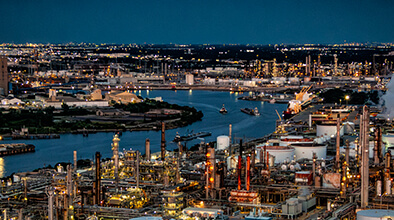
Greenberg Streich Injury Lawyers represents explosion victims throughout Texas and the Gulf Coast. Our Sugar Land, TX explosion accident lawyer team handles claims arising from refinery explosions, chemical plant blasts, pipeline ruptures, gas leaks, tank battery fires, and industrial disasters of all types. The Houston region hosts the largest petrochemical complex in North America. That concentration creates jobs—and catastrophic risk for the workers and communities nearby.
Why Choose Greenberg Streich For Explosion Accident Cases In Sugar Land, Texas?
Defense Background Against The Same Companies You’re Facing
Mike Streich knows how industrial defendants think. He spent close to a decade representing them. Energy companies. Chemical manufacturers. Their insurers—including Lloyd’s of London syndicate members handling catastrophic losses from exactly the types of explosions that injure and kill Texas workers.
What does that mean for you? Mike sat in rooms where defense strategies got built. He watched how these companies evaluate claims. Learned which evidence actually threatens their positions. Saw where their arguments fall apart under pressure.
Now he uses everything he learned against them.
Mike graduated cum laude from the University of Houston Law Center. Multiple Texas Rising Star recognitions. But what matters most isn’t the credentials—it’s understanding the other side’s playbook and knowing how to beat it.
Track Record In Catastrophic Burn And Explosion Cases
Explosion cases demand attorneys who’ve handled catastrophic injuries before. We have.
Our firm recovered $20 million for an oilfield burn victim. Our case results include hundreds of millions recovered for injured Texans in serious cases. Matt Greenberg secured the largest personal injury settlement ever recorded in Tarrant County. Also the largest verdict in Montgomery County. ABC, FOX, CBS, Texas Lawbook—they’ve covered his work. SuperLawyers, Lawdragon, National Trial Lawyers have all recognized his achievements.
Burn injuries from explosions devastate survivors. Large body surface area burns requiring years of treatment. Skin grafts. Reconstructive surgeries. Permanent disfigurement. Traumatic brain injuries from blast waves. Amputations. Wrongful death leaving families shattered. As a Sugar Land, TX personal injury lawyer handling catastrophic cases for 12 years, Matt knows how to present these injuries to juries.
Resources To Take On Industrial Giants
Companies that operate refineries and chemical plants have money. Lots of it. They hire armies of lawyers. Retain expensive professionals. Bury opponents in discovery. Delay for years hoping injured workers give up.
Beating them requires resources. And resolve.
We advance all litigation costs—engineering specialists, accident reconstruction, medical specialists, economists, metallurgists, whatever the case requires. No upfront fees. No hourly billing. Our contingency structure means you pay nothing unless we win. We get paid when you get paid.
⭐⭐⭐⭐⭐
“After my accident, I didn’t know where to turn. They handled everything—the investigation, the negotiations. I could focus on recovery while they fought for me. The result exceeded anything I expected.” — Emmalee Taylor

Types Of Explosion Accident Cases We Handle In Sugar Land
Explosions happen across industries, but certain settings produce them repeatedly. We represent victims in cases involving:
- Refinery explosions. The Houston-Galveston region hosts more refining capacity than anywhere else in America. These facilities process crude oil under extreme temperatures and pressures. Equipment failures release flammable vapors. Ignition sources exist everywhere. When things go wrong, workers die. The Texas City BP disaster killed 15 workers in 2005. Smaller incidents injure and kill people regularly without making national news. We handle claims against refinery operators whose negligence causes explosions.
- Chemical plant explosions. Petrochemical facilities manufacture products under conditions that can turn deadly instantly. Reactor runaways. Overpressure events. Chemical releases that ignite or explode on contact with air or water. The 2019 TPC Group explosion in Port Neches blew out windows miles away and forced 50,000 people to evacuate. Workers at ground zero face the worst outcomes.
- Pipeline explosions. Thousands of miles of pipeline crisscross Texas carrying natural gas, crude oil, refined products. Corrosion weakens pipe walls. Third-party excavation damages buried lines. Pressure control systems fail. When pipelines rupture and ignite, the results are catastrophic. Homes destroyed. Workers killed. Bystanders burned.
- Tank battery and storage facility explosions. Oil and gas production generates vapors that accumulate in tanks and enclosed spaces. Improper venting. Static discharge. Lightning strikes. Equipment malfunctions. Tank battery explosions kill oilfield workers and injure nearby residents. Storage terminal fires spread rapidly and resist suppression.
- Natural gas explosions. Gas leaks from distribution lines, meters, appliances, and industrial equipment. When gas accumulates in enclosed spaces and finds an ignition source, explosions level buildings. Workers performing maintenance. Residents in their homes. Customers in commercial buildings. These cases often involve utility company negligence or equipment defects.
- Grain elevator and dust explosions. Combustible dust accumulates in grain handling facilities, manufacturing plants, and other industrial settings. When dust concentrations reach explosive levels, any spark triggers catastrophic deflagration. Grain elevator explosions have killed workers throughout Texas. OSHA has identified combustible dust as a serious workplace hazard, yet facilities continue ignoring proper housekeeping and ventilation requirements.
- Propane and compressed gas explosions. Pressurized containers fail. Valves malfunction. Improper handling causes releases. When compressed flammable gases escape and ignite, explosions follow. Construction sites, industrial facilities, even residential settings—propane and compressed gas explosions happen across contexts.
- Boiler and pressure vessel explosions. Steam boilers and pressure vessels operate throughout industrial facilities. Inadequate maintenance. Safety valve failures. Operator error. Overpressure conditions. When these vessels fail catastrophically, the energy release destroys equipment, structures, and anyone nearby.
Texas Legal Requirements For Explosion Accident Claims
Negligence Claims Against Facility Operators
Most explosion cases proceed under Texas negligence law. Facility operators owe duties to maintain safe premises, follow proper procedures, train workers adequately, and comply with applicable safety regulations. Breaching those duties and causing injury creates liability.
Proving negligence in explosion cases typically requires engineering analysis. What failed? Why? Could proper maintenance have prevented it? Did the facility follow industry standards? Were there warning signs that got ignored?
These questions require professionals—metallurgists to analyze failed equipment, process engineers to evaluate procedures, safety consultants to assess compliance. We retain whatever specialists cases require.
Product Liability Against Manufacturers
Sometimes equipment fails despite proper operation and maintenance. Valves malfunction. Sensors give false readings. Safety systems don’t activate. When defective products cause explosions, manufacturers face strict liability regardless of their knowledge or care.
Product liability claims don’t require proving negligence. If a product was unreasonably dangerous due to design defects, manufacturing flaws, or inadequate warnings, the manufacturer is liable for resulting injuries. These claims can proceed alongside negligence claims against facility operators.
Premises Liability
Property owners owe duties to people lawfully on their premises. The level of duty depends on the visitor’s status—invitees get the highest protection. Workers at industrial facilities are typically invitees owed reasonable care to maintain safe conditions and warn of known hazards.
Chapter 95 of the Civil Practice and Remedies Code affects premises liability claims involving independent contractor employees. But it doesn’t eliminate liability when property owners control the work or have actual knowledge of dangerous conditions.
Workers’ Compensation Issues
Texas doesn’t require employers to carry workers’ compensation. Many industrial employers do; some don’t.
If your employer carries workers’ comp, you typically cannot sue them directly—but you can pursue third-party claims against other responsible parties. Equipment manufacturers. Contractors. Property owners who aren’t your employer. These third-party claims allow full damages that workers’ comp doesn’t provide.
If your employer is a non-subscriber, you can sue them directly for negligence. And they lose important defenses under Labor Code Chapter 406—contributory negligence, assumption of risk, fellow employee negligence. Non-subscriber cases often produce larger recoveries than subscriber claims.
Statute Of Limitations
Personal injury claims must be filed within two years under Section 16.003 of the Civil Practice and Remedies Code. Wrongful death claims run from the death date. Product liability claims may have different deadlines.
Explosion cases require extensive investigation—engineering analysis, witness interviews, document collection. Starting early matters. Evidence gets lost. Memories fade. Equipment gets repaired or scrapped. Two years isn’t as long as it sounds.
Federal Regulations
Multiple agencies regulate facilities where explosions occur. OSHA Process Safety Management standards govern refineries and chemical plants handling highly hazardous chemicals. EPA Risk Management Program rules impose similar requirements with environmental focus. PHMSA regulates pipeline safety.
Regulatory violations provide powerful evidence in explosion cases. When facilities ignore rules specifically designed to prevent the type of disaster that injured you, that evidence supports both negligence claims and punitive damages.

What Damages Are Recoverable In Sugar Land Explosion Accident Cases?
Economic Damages
Explosion injuries generate staggering medical costs. Emergency response. Trauma surgery. Burn unit care—which runs thousands of dollars daily. Skin grafts. Reconstructive procedures. ICU stays lasting weeks. Rehabilitation extending months. Follow-up surgeries for years.
Severe burn victims face lifetime medical needs. Scar revisions. Physical therapy to maintain mobility. Psychological treatment for trauma. Medications managing chronic pain. We work with life care planners who project these needs across expected lifetimes and calculate present values.
Lost income compounds the financial devastation. Explosion victims often face months of initial recovery followed by permanent disability. Workers who earned $60,000 to $100,000 annually—common in industrial settings—lose decades of income when injuries end careers. Even workers who eventually return to some employment may face permanent limitations reducing earning capacity. We retain economists who calculate lifetime wage losses accurately.
Other economic damages include property damage—vehicles destroyed, personal effects incinerated—and the incidental expenses that accumulate throughout recovery and beyond.
Non-Economic Damages
Burn injuries cause suffering that words struggle to capture. Debridement—removing dead tissue from burn wounds—is excruciating. Skin graft procedures. The slow, painful process of rehabilitation. Learning to live with scars that cover large body areas. Chronic pain that medications manage but never eliminate.
Mental anguish follows explosion trauma. PTSD is common. Survivors relive the blast. Nightmares. Flashbacks triggered by sounds, smells, flames. Depression as reality sets in—the life you expected is gone. Anxiety about futures that now look nothing like what you planned. Fear of returning to industrial work. These psychological injuries persist for years. Sometimes forever.
Disfigurement from burns affects how you see yourself and how others see you. Social interactions change. Relationships strain. Self-image suffers. Courts recognize this harm as separate from physical pain and compensable on its own terms.
Loss of enjoyment covers what explosions take beyond income and health. Activities you loved. Time with family unconstrained by pain. The retirement you planned.
Punitive Damages
Explosion cases sometimes reveal conduct justifying punitive damages—knowing safety violations, falsified inspection records, conscious decisions to prioritize production over worker safety. When evidence supports this level of misconduct, Chapter 41 of the Civil Practice and Remedies Code allows punitive awards.
These damages punish egregious behavior. They also send messages throughout industries where profit motives sometimes override safety concerns. We pursue punitive damages when facts warrant.
Explosion Accident Statistics In Sugar Land
Texas hosts more refining and petrochemical capacity than any other state. According to the U.S. Energy Information Administration, Texas refineries process over 5.9 million barrels of crude oil daily—roughly 32% of total U.S. refining capacity. Chemical manufacturing concentrates along the Gulf Coast. This industrial density creates economic benefit and concentrated explosion risk.
The Chemical Safety Board investigates major industrial accidents and publishes findings. Their reports document recurring patterns—inadequate process safety management, deferred maintenance, insufficient hazard analysis, poor emergency response planning. The same failures cause explosions repeatedly because companies don’t learn from others’ disasters.
OSHA data reveals persistent Process Safety Management violations at covered facilities. Mechanical integrity failures. Inadequate operating procedures. Deficient management of change. These violations don’t just generate citations—they precede explosions.
Historical incidents underscore the risk. The 2005 BP Texas City explosion killed 15 workers and injured 180. The 2019 TPC Group Port Neches explosion injured multiple workers and forced massive evacuation. The 2013 West Fertilizer explosion killed 15 people including first responders. Smaller incidents—unreported nationally—injure and kill workers regularly.
Bureau of Labor Statistics data shows fires and explosions cause approximately 3% of workplace fatalities nationally but significantly higher percentages in petroleum refining and chemical manufacturing. When explosions occur, they tend toward the catastrophic.
Fort Bend County sits adjacent to the Houston petrochemical corridor. Residents work at refineries, chemical plants, and industrial facilities throughout the region. When explosions occur at these facilities, workers need attorneys close to home who understand industrial disaster litigation.

Sugar Land, TX Explosion Accident FAQs
Who Is Liable For An Industrial Explosion?
Multiple parties may bear responsibility. Facility operators who failed to maintain safe conditions. Equipment manufacturers whose defective products caused failures. Contractors who performed negligent work. Property owners who controlled premises. Engineering firms that designed flawed systems. We investigate thoroughly to identify all potentially liable parties and maximize available recovery sources.
What If My Employer Caused The Explosion?
Your options depend on whether your employer carries workers’ compensation. If they do, you typically can’t sue them directly—but you can pursue third-party claims against other responsible parties and collect workers’ comp benefits. If your employer is a non-subscriber, you can sue them directly for negligence with significant legal advantages. We determine your employer’s status and identify all available claims.
How Are Explosion Cases Investigated?
Thoroughly. Engineering specialists analyze failed equipment. Metallurgists examine fracture patterns. Process safety consultants evaluate procedures. We collect maintenance records, inspection reports, training documentation, and incident history. Sometimes we hire accident reconstruction specialists to model what happened. Explosion cases require substantial investigation—that’s why starting early matters.
Can I Recover If I Was Partially At Fault?
Texas follows modified comparative fault under Section 33.001 of the Civil Practice and Remedies Code. You can recover if your fault was 50% or less, though your recovery decreases by your fault percentage. At 51% or more fault, you recover nothing. Defense attorneys routinely argue injured workers contributed to explosions. We develop evidence countering those arguments.
What If A Family Member Died In An Explosion?
Surviving family members may bring wrongful death claims seeking compensation for their losses—loss of financial support, loss of companionship, mental anguish from the death. The deceased’s estate may bring survival claims for pain and suffering the victim experienced before death. These claims proceed under the same legal theories as injury claims.
Steps To Take After An Explosion Accident In Sugar Land, TX
At The Scene
If you’re able, get away from the immediate area. Secondary explosions happen. Structural collapse follows initial blasts. Toxic releases may accompany explosions. Once safe, call 911 if emergency services haven’t arrived.
Don’t attempt to re-enter damaged areas. Even to help others. First responders have training and equipment for rescue operations. Well-meaning attempts often create additional casualties.
If injured, accept medical transport. Adrenaline masks pain. Internal injuries from blast waves may not manifest obvious symptoms immediately. Traumatic brain injuries from pressure waves can occur without visible head trauma.
In The Days Following
Get comprehensive medical evaluation even if initial injuries seemed minor. Blast injuries have delayed presentations. Hearing damage. Internal bleeding. Pulmonary contusion. Follow all treatment recommendations without gaps.
Document everything you remember about what happened. Write it down while fresh. Identify coworkers who witnessed the explosion or know about conditions leading up to it. Collect names and contact information.
Don’t give recorded statements to company investigators or insurance adjusters without attorney guidance. These statements can be used against you later. Cooperate with government investigators—OSHA, CSB—but understand that company interests and your interests aren’t aligned.
Before Filing A Claim
Consult an experienced explosion accident attorney as soon as possible. These cases require extensive investigation that should begin immediately. Evidence gets lost. Equipment gets repaired or removed. Witnesses scatter. Companies circle wagons.
Understanding proper post-accident steps protects your ability to recover full compensation. We guide clients through the process from initial consultation through resolution.

Dangerous Locations For Explosion Accidents Near Sugar Land
Industrial facilities throughout the Houston region create explosion risk:
Houston Ship Channel hosts refineries, chemical plants, and petrochemical facilities stretching from Houston to Galveston Bay. This corridor contains more explosive potential than anywhere else in America.
Texas City industrial complex includes major refineries and chemical plants with history of catastrophic incidents.
Pasadena and Deer Park host concentrated petrochemical operations east of Houston.
Baytown refinery and chemical manufacturing facilities employ thousands.
Freeport chemical manufacturing along the Brazos River and Gulf Coast.
Pipeline corridors throughout the region carrying natural gas, crude oil, and refined products.
Fort Bend County residents work throughout this industrial landscape. When explosions occur—and they do, regularly—workers need accessible attorneys who understand industrial disaster litigation.
Local Resources For Explosion Accident Victims
- Chemical Safety Board: The CSB investigates major chemical accidents and publishes detailed reports and safety recommendations.
- Occupational Safety and Health Administration: OSHA enforces workplace safety standards and investigates serious industrial incidents.
- Environmental Protection Agency: EPA administers Risk Management Program requirements for facilities handling hazardous substances.
- Pipeline and Hazardous Materials Safety Administration: PHMSA regulates pipeline safety and investigates pipeline failures.
- Texas Commission on Environmental Quality: TCEQ monitors air quality and investigates chemical releases.
- Memorial Hermann Texas Medical Center: 6411 Fannin St, Houston, TX 77030 — Level I trauma center with burn unit for catastrophic explosion injuries.
- UTMB Galveston Burn Unit: 301 University Blvd, Galveston, TX 77555 — Specialized burn treatment for severe thermal injuries.
- Fort Bend County District Clerk: The District Clerk’s office maintains civil court records.
Contact Greenberg Streich Injury Lawyers
Explosions aren’t accidents in any meaningful sense. They result from decisions—to defer maintenance, to skip inspections, to ignore warning signs, to prioritize production over safety. When those decisions cause catastrophic harm to workers and communities, the companies responsible should pay the full cost.
If you or a family member was injured in an explosion anywhere in Texas, contact us for a free consultation. We’ll investigate what happened, identify all responsible parties, and explain your legal options. No pressure. No obligation. Just honest answers about where you stand and what we can do.
Our attorneys have recovered hundreds of millions for injured Texans, including $20 million for a burn victim in an industrial setting. We welcome referrals from attorneys needing experienced representation for explosion cases. Past clients share their experiences in testimonials, and our firm overview explains how we approach serious cases.