Helping injured clients in Houston pursue full recovery in industrial accident matters.
If you have been injured in an industrial or workplace accident in Houston, an attorney experienced in on-the-job injury claims can help you determine which legal options apply to your situation and pursue compensation from the responsible parties. Industrial injury cases in Texas involve a legal landscape that differs from most other states, particularly regarding workers’ compensation coverage.
Greenberg Streich Injury Lawyers represents injured workers on the plaintiff side throughout Texas. Our attorneys bring more than two decades of combined trial experience to industrial injury cases and handle every matter on a contingency fee basis. If you need a Houston, TX industrial accident lawyer, contact our firm for a free consultation.
Industrial Accident Lawyer Houston, TX
An industrial accident lawyer represents workers hurt on the job at construction sites, manufacturing plants, warehouses, chemical facilities, and oil and gas operations. These cases sit at the intersection of workers’ compensation law, third-party negligence claims, and a legal framework unique to Texas: the non-subscriber employer system.
Most states require private employers to carry workers’ compensation insurance. Texas does not. A significant number of Houston industrial employers have opted out of the workers’ comp system entirely. For workers employed by these non-subscribers, the legal calculus changes. Rather than accepting limited comp benefits, injured employees can file direct negligence lawsuits against the employer and pursue full damages.
Types of Industrial Workplace Accident Cases We Handle in Houston
Industrial workplaces in Houston encompass everything from high-rise construction sites to petrochemical processing facilities. The type of work, the equipment involved, and the number of contractors on site all affect how liability is established and how compensation is pursued.
At Greenberg Streich Injury Lawyers, we handle industrial workplace accident cases including the following:
- Construction site accidents. Falls kill more construction workers in Texas than any other type of incident. Scaffolding collapses, ladder falls, and struck-by events involving cranes and falling materials follow close behind. Traumatic brain injuries from falls and impacts account for many of the most severe outcomes on Houston construction sites.
- Oilfield injuries. Blowouts, well kicks, and heavy equipment failures on drilling rigs and well sites cause catastrophic harm. These cases frequently involve multiple contractors with overlapping responsibilities for safety.
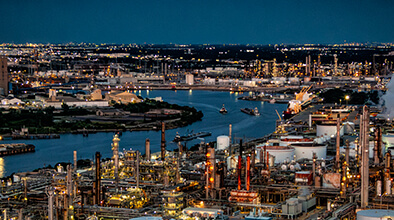
- Refinery accidents. The Houston Ship Channel corridor is home to some of the largest petrochemical processing facilities in the country. Explosions, fires, and chemical releases at these plants injure workers during both normal operations and turnaround maintenance.
- Burn injuries. Flash fires, arc flash events, chemical splashes, and contact with superheated surfaces produce burns that frequently require years of reconstructive surgery. Industrial burn injuries are among the most painful and disfiguring injuries we handle.
- Equipment and machinery failures. Unguarded moving parts, malfunctioning interlocks, and defective industrial equipment cause amputations, crush injuries, and severe lacerations. When a product defect caused the malfunction, the manufacturer may share liability alongside the employer.
- Crane and rigging accidents. A dropped load or collapsed boom on an industrial site produces catastrophic injuries. Operator error, inadequate training, and skipped equipment inspections are involved in most of these incidents.
- Electrical injuries. Arc flash exposure and direct contact with energized systems can cause cardiac arrest, severe burns, and permanent neurological damage. Lockout/tagout violations are the most common contributing factor.
- Chemical and toxic exposure. Benzene, hydrogen sulfide, asbestos, silica. Workers in Houston’s industrial corridor encounter these substances regularly. Acute injuries can manifest within hours of exposure, while chronic conditions may take years to develop. Documenting exposure levels is critical.
- Wrongful death. When an industrial accident kills a worker, Texas law allows the surviving spouse, children, and parents to file wrongful death claims against negligent employers, contractors, and equipment manufacturers.
Why Choose Greenberg Streich Injury Lawyers as My Industrial Accident Lawyer in Houston, TX?
Defense-Side Experience in Industrial Injury Litigation
Mike Streich spent nearly a decade defending corporations and insurance syndicates in catastrophic injury and death cases before turning to plaintiff representation. His defense work included cases involving oilfield, pipeline, refinery, and commercial motor vehicle incidents on behalf of Lloyd’s of London syndicate members and other major insurers. That experience gives him a working knowledge of how employers, contractors, and their insurance carriers investigate industrial accidents, evaluate liability, and build their defense strategies. Mike graduated cum laude from the UH Law Center and has been recognized as a Texas Rising Star by Super Lawyers multiple years.
Matt Greenberg has served as lead trial counsel in cases producing record-setting verdicts and settlements across Texas. He earned his J.D. from Baylor Law School, holds licenses in Texas, Louisiana, and Arizona, and has been recognized by Lawdragon and the National Trial Lawyers.
Together, our attorneys have helped clients recover over $400 million in verdicts and settlements. That includes an $11 million workplace injury recovery, a $7.75 million workplace injury settlement, a $6.75 million industrial injury recovery, and a $20 million settlement for a burned oilfield worker. As your personal injury lawyer in Houston, our firm handles every industrial accident case on a contingency fee basis. You pay nothing unless we obtain a recovery.
What Is Important to Understand About an Industrial Workplace Accident Case?
Damages, Liability, and Compensation for Industrial Accident Cases
What an injured worker can recover depends on three things: who employed them, whether that employer carries workers’ compensation, and whether any third parties share fault for the accident. Texas law opens different paths depending on the answers.
If your employer is a non-subscriber, you can file a negligence lawsuit directly. Non-subscriber employees are not limited to workers’ comp benefits. Available damages include:
- Medical expenses, including emergency care, surgery, rehabilitation, and projected future treatment
- Lost wages during recovery and diminished future earning capacity
- Physical pain and mental anguish
- Disfigurement and physical impairment
- Loss of enjoyment of daily activities
Workers whose employers carry workers’ compensation are generally limited to comp benefits for claims against the employer. However, injured workers may file third-party negligence claims against other entities whose negligence contributed to the accident, including general contractors, property owners, equipment manufacturers, and subcontractors.
Texas follows a modified comparative negligence framework. Your recovery is reduced by your percentage of fault, and recovery is barred entirely if you are found more than 50 percent responsible for the accident.
What Are Important Aspects of an Industrial Workplace Accident Case?
These cases are not straightforward. The liability picture on a multi-contractor industrial site can involve half a dozen entities, each pointing at the other.
- The first question your attorney must answer is your employment status. Were you a direct employee, an independent contractor, or a leased worker? The answer determines which parties can be held liable and through which legal mechanism.
- After that, the investigation turns to the contractor hierarchy. Many Houston industrial sites operate with a general contractor overseeing multiple subcontractors, each of which carries separate insurance and bears its own safety obligations. Sorting through that structure takes time and document review.
- OSHA workplace standards set baseline safety requirements for industrial operations. When an employer has been cited for violations at the same site where the injury occurred, those citations become evidence in the civil case.
- Evidence does not last long at industrial sites. Post-incident cleanup begins almost immediately, and physical conditions change. An attorney retained within days of the accident can issue formal preservation demands before critical evidence disappears.
What Is the Industrial Workplace Accident Case Timeline?
The timeline for an industrial accident case depends on the severity of injuries, the number of responsible parties, and whether the employer is a subscriber or non-subscriber to workers’ compensation. These cases generally follow this progression.
- The attorney begins investigating immediately, identifying responsible parties and issuing evidence preservation demands to the employer, general contractor, and equipment owners. Workers should also take steps to protect their case from the outset, including documenting the scene and preserving personal protective equipment.
- Medical treatment continues. For serious injuries such as amputations, severe burns, or spinal cord damage, the treatment phase can extend a year or longer before the full medical picture is available.
- The firm evaluates all available claims, including workers’ comp benefits, non-subscriber lawsuits, and third-party negligence claims against other contractors or equipment manufacturers.
- If litigation is necessary, the case moves through discovery, depositions, and motion practice. Industrial cases with multiple defendants and complex liability issues often take longer to resolve.
- Trial preparation and trial occur when a fair settlement cannot be reached. Industrial accident cases in Harris County typically take 18 months to three years from filing to resolution, depending on complexity.
What Should You Bring to Your Industrial Workplace Accident Consultation?
Having your documentation organized before the consultation allows the attorneys to evaluate your claim more efficiently. Bring whatever is available to you:
- Incident or accident reports filed with your employer or the general contractor
- Medical records and bills from treatment received so far
- Photographs of the accident scene, your injuries, or the equipment involved
- Your employment agreement, pay records, and job classification details
- Names and contact information for co-workers or supervisors who witnessed the incident
During the consultation, we review the facts, determine whether your employer subscribes to workers’ compensation, and explain the legal options available under Texas law. There is no charge for this initial meeting.
What Are Important Texas Legal Resources for Industrial Workplace Accident Cases?
Texas law provides the framework for workplace injury claims, though the specific legal path depends on whether the employer carries workers’ compensation. The following resources help injured workers and their families locate applicable statutes and information.
- The statute of limitations for personal injury claims in Texas is two years from the date of injury under Chapter 16 of the Civil Practice and Remedies Code. Workers’ compensation claims have a separate filing deadline.
- Texas negligence law follows a proportionate responsibility framework. A plaintiff’s recovery is reduced by their percentage of fault, and recovery is barred if the plaintiff bears more than 50 percent of the responsibility.
- Texas does not cap economic damages in most personal injury cases. Non-economic damage caps apply in limited categories.
- The OSHA safety standards page provides access to federal workplace safety regulations and the full text of the OSH Act.
- The Texas Legislature website provides access to the Civil Practice and Remedies Code and other state statutes.
- Our firm monitors Texas legal changes that may affect workplace injury claims and employer liability.
Reach Out to Greenberg Streich Injury Lawyers to Schedule a Consultation
If you or a family member has been injured in an industrial or workplace accident in Houston, TX, our attorneys are available for a free and confidential case evaluation. We represent injured workers on a contingency fee basis, meaning there are no upfront costs and no attorney fees unless we recover compensation. Contact us to schedule a meeting at a time that works for your situation.
Industrial Workplace Accident Statistics in Houston
Texas consistently ranks among the states with the highest number of workplace fatalities. According to BLS injury data, the state recorded 557 fatal workplace injuries in 2024, with a fatality rate of 3.9 per 100,000 workers. That rate is 18 percent higher than the national average of 3.3. Nationally, 5,070 workers died from job-related injuries in 2024, and employers reported 2.5 million workplace injuries and illnesses.
Falls remain the leading cause of fatal workplace injuries in Texas. OSHA investigated 189 fatal fall accidents nationwide in 2024, many at construction sites. Houston’s industrial economy, which includes petrochemical processing, oil and gas operations, heavy construction, and freight rail operations, concentrates workplace hazards across a metropolitan area with one of the largest industrial workforces in the country. Accidents involving commercial trucks serving industrial sites add further risk on surrounding roads.
Common Causes of Industrial Workplace Accidents
Most industrial accidents do not result from a single failure. They build from overlapping problems: a skipped inspection, a shortcut on safety protocol, a supervisor who was not watching. Here are the causes we see most often in Houston.
1. Inadequate fall protection. Falls from heights kill more construction workers in Texas than any other type of incident. Guardrails, safety nets, and personal fall arrest systems are required when workers operate at elevation. OSHA cites fall protection violations more frequently than almost any other standard.
2. Failure to maintain equipment. A machine with worn brake pads, a bypassed safety guard, or a deferred maintenance schedule creates risk for every worker nearby. Employers are supposed to follow manufacturer specifications for inspections and repairs. Many don’t.
3. Insufficient training and supervision. This one is straightforward. Workers assigned to operate heavy machinery, enter confined spaces, or handle hazardous materials without proper training get hurt at higher rates. When those same workers are left unsupervised, the risk compounds.
4. Lockout/tagout violations. Before maintenance work begins on any powered equipment, the energy source must be isolated and locked out. OSHA’s lockout/tagout standard exists because workers have lost hands, arms, and lives when machines were re-energized while someone was still inside. It remains one of the most frequently cited violations in the country.
5. Hazardous chemical exposure. Houston’s petrochemical corridor puts workers in contact with benzene, hydrogen sulfide, silica dust, and hydrofluoric acid regularly. Adequate ventilation, protective equipment, and exposure monitoring are not optional. When employers cut corners, the consequences range from acute chemical burns to chronic respiratory disease.
6. Scaffolding defects. Scaffolding that is improperly erected, overloaded, or skipped during inspection collapses without warning. These failures are especially common during turnaround maintenance at industrial plants and during commercial building construction.
7. Crane and heavy lift failures. When a crane drops a load or a boom collapses, the injuries are catastrophic. Overloading, rigging errors, and skipped pre-operation inspections are the usual contributing factors. Both the equipment and the operator must meet certification requirements, and both are frequently involved when something goes wrong.
8. Trench and excavation collapses. An unprotected trench can collapse and bury a worker under thousands of pounds of soil in seconds. OSHA requires protective shoring or sloping systems for excavations beyond certain depths. Violations are common, and the fatality rate in unprotected trenches is high.
9. Inadequate personal protective equipment. Hard hats, safety glasses, hearing protection, respiratory equipment. These are basic requirements in industrial environments. Employers who fail to provide them or fail to enforce their use expose workers to injuries that were entirely preventable.
10. Fatigue and excessive work hours. Extended shifts and mandatory overtime dull reaction time and impair judgment. A worker operating a forklift on the fourteenth hour of a shift is not the same worker who clocked in that morning.
Houston Industrial Workplace Accident Lawyer FAQs
What is the difference between a workers’ comp claim and a personal injury lawsuit?
Workers’ compensation pays out regardless of who was at fault, but the benefits are limited and fixed by statute. A personal injury lawsuit requires proof of negligence. If you succeed, the potential recovery is significantly larger because it includes damages for pain and suffering and full lost earning capacity. Which path is available depends on whether your employer carries workers’ compensation insurance.
Can I sue my employer directly for a workplace injury in Texas?
It depends on your employer’s workers’ compensation status. Non-subscriber employers can be sued directly for negligence, and they lose several legal defenses in the process, including the exclusive remedy defense. If your employer is a subscriber, your claim against the employer is generally limited to comp benefits. But you may still have viable third-party claims against other parties at the job site.
What is a third-party claim in a workplace accident case?
A third-party claim is a negligence lawsuit against someone other than your direct employer. On industrial job sites, that often means the general contractor, the property owner, an equipment manufacturer, or another subcontractor. These claims are available whether or not your employer carries workers’ comp.
How long do I have to file a workplace injury claim in Texas?
Two years from the date of injury for a personal injury lawsuit under Texas law. Workers’ comp claims have their own separate deadline. Missing either one forfeits your right to compensation.
What types of injuries are most common in industrial accidents?
The injuries we see most often include crush injuries, amputations, severe burns, spinal cord damage, and traumatic brain injuries. Chemical exposure cases also produce serious respiratory conditions and long-term health problems. Hearing loss from prolonged industrial noise exposure is another category that many workers do not realize qualifies for a claim.
Should I report the injury to my employer even if I think it was my fault?
Yes, without question. Texas comparative negligence rules allow recovery as long as your fault does not exceed 50 percent. Failing to report the injury on time creates a gap in the record that the employer’s lawyers will use against you later.
What if my employer discourages me from filing a claim?
Texas law prohibits retaliation against workers who report injuries or file claims. If your employer is pressuring you not to pursue your case, document everything. Write down what was said, when it was said, and who said it. Then bring that information to your attorney.
How much does it cost to hire an industrial accident lawyer?
We handle these cases on a contingency fee basis. You pay nothing upfront. If we do not recover compensation for you, you owe no attorney fees.
What role does OSHA play in my case?
OSHA investigates whether the employer violated federal safety regulations. Citations issued after an inspection can serve as evidence of negligence in your civil case. But OSHA does not award compensation to injured workers. That is what the civil claim is for.
Do I need a lawyer for an industrial accident case?
Industrial cases involve multiple potential defendants, layers of insurance, workers’ compensation law, and corporate defense teams with substantial resources. An attorney with experience in oilfield and industrial litigation can identify every responsible party and pursue the full value of your claim. Negotiating with an employer’s insurer without representation puts you at a significant disadvantage.
Local Information for Houston Industrial Workplace Accident Cases
Most Dangerous Locations for Industrial Accidents in Houston
Houston’s industrial geography concentrates workplace hazards in specific corridors and districts.
- The Houston Ship Channel corridor from the Turning Basin through Deer Park, Pasadena, and La Porte contains dozens of refineries, chemical plants, and port terminals where industrial injuries occur during processing, maintenance, and cargo handling.
- The Energy Corridor along Interstate 10 west of Beltway 8 houses offices and operational facilities for oil and gas companies, with associated field operations across the region.
- Greenspoint and north Houston construction zones see high volumes of commercial construction activity where fall hazards and struck-by incidents are common.
- Port Houston terminals and intermodal facilities handle heavy cargo, container operations, and vessel loading where maritime workers face risks from crane operations, equipment movement, and vessel operations.
- East Houston industrial parks and warehouses along US-90 and the East Freeway contain manufacturing, fabrication, and distribution facilities where equipment injuries occur.
What Are Important Local Resources for Houston Industrial Workplace Accident Cases?
Workers injured in industrial accidents in Houston may need to contact the following agencies and medical facilities. These organizations are listed for reference purposes only.
- Houston Fire Department for emergency response at industrial sites: (832) 394-6700
- Memorial Hermann, a Level I trauma center for critical industrial injuries: (713) 704-4000
- Harris Health System (Ben Taub Hospital), a Level I trauma center serving Harris County: (713) 873-2000
- OSHA Houston Area Office for reporting unsafe workplace conditions or safety violations
Listing these resources does not constitute an endorsement or recommendation by Greenberg Streich Injury Lawyers.
About Greenberg Streich Injury Lawyers
Greenberg Streich Injury Lawyers is a Houston-based injury law firm that concentrates on catastrophic and fatal injury cases across Texas. Matt Greenberg is active in the Texas Trial Lawyers Association and has been featured in media coverage by the Dallas Morning News, the Texas Lawbook, and Houston Public Media. Mike Streich served as Vice President of the Student Bar Association at the University of Houston and competed on the law school’s mock trial team, and he is a member of the Houston Trial Lawyers Association.
What Our Clients Say
⭐⭐⭐⭐⭐
“I was injured in an accident & Mike was exceptional from start to finish. He let me know the process and provided follow ups anytime there was an update in my injury case. I felt like he had a grasp of my personal situation and it was clear he definitely had my back. I would highly recommend him to anyone who wants the real.”
Jonathan Louis
Read more reviews on our Google Business Profile.
Contact Greenberg Streich Injury Lawyers
Industrial workplace accidents involve complex liability questions, multiple defendants, and corporate legal departments. At Greenberg Streich Injury Lawyers, we provide free initial consultations for Houston industrial accident cases. Our contingency fee structure means no upfront costs and no attorney fees unless we recover compensation on your behalf. Our attorneys are available to discuss your case and can evaluate which legal options apply to your situation. Contact us to schedule your free case review with a Houston, TX industrial accident attorney.