Self-Driving Trucks in Texas: What Drivers Should Know
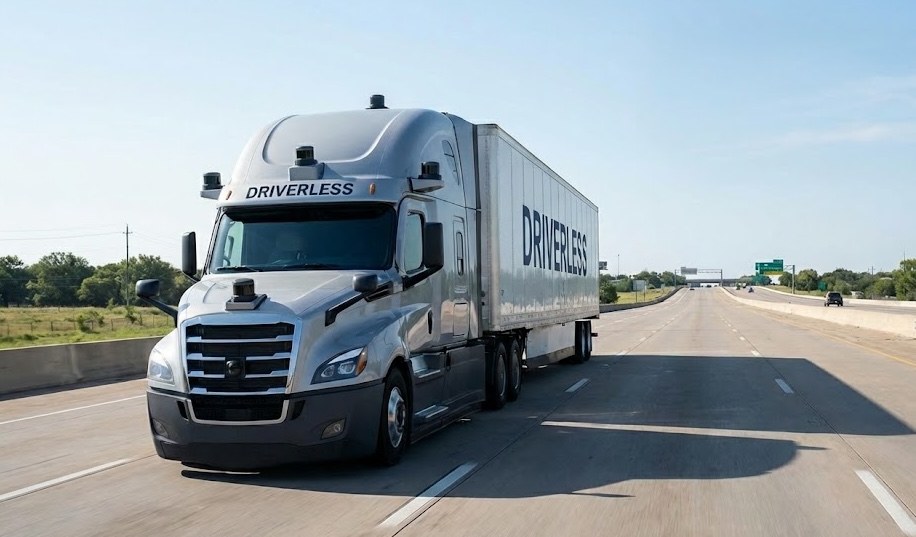
If you drive I-45 between Dallas and Houston, you may already be sharing the road with a “driverless” semi (or you will soon).
Autonomous trucking has moved from test runs to real commercial freight in Texas. Aurora Innovation publicly announced regular driverless customer deliveries between Dallas and Houston after closing its “safety case,” and it has discussed expansions beyond Texas, including routes like Fort Worth to Phoenix.
For everyday drivers, this raises practical questions:
- Are these trucks truly “driverless”?
- What happens if something goes wrong?
- Who’s responsible when a computer-powered 80,000-pound vehicle causes a crash?
At Greenberg Streich Injury Lawyers, we’re watching this shift closely because when technology changes trucking, it also changes risk, evidence, and liability. This guide breaks down what’s happening in Texas and across the Sun Belt, what it means for drivers, and what you should do if you’re involved in a collision with an autonomous truck.
Why Texas (and the Sun Belt) Is Ground Zero for Autonomous Freight
Texas has become a preferred launchpad for autonomous trucking for a few reasons:
-
Major freight corridors. The Dallas–Houston lane is one of the busiest in the country, making it attractive for commercial deployments. Aurora specifically launched driverless customer deliveries on this corridor.
-
Favorable state framework. Texas law has allowed automated vehicles to operate without a human driver in the vehicle, and the state has generally preempted patchwork local regulation.
-
Sun Belt operating conditions. Autonomous trucking companies talk openly about expanding across the “Sun Belt” and validating longer routes that span diverse geography and climate across the southern U.S.
In February 2026, Aurora announced it is tripling its driverless network to 10 routes and preparing to expand across the U.S. Sun Belt, including the ability to serve customer endpoints in 2026.
Are These Trucks Really “Driverless”?
“Driverless” can mean different things, depending on the company, route, and operating mode.
Level 4 autonomy is the current reality
Many commercial autonomous trucking deployments describe the system as SAE Level 4, meaning the truck can operate without human intervention within a defined operational design domain (ODD), often specific highways, speeds, weather limits, and mapped areas.
Some runs still include a human in the cab but others don’t
A key public concern is whether there’s a “safety driver” onboard. Some deployments use them; some do not. Legal commentators and safety advocates have raised concerns about limited oversight, especially when a truck operates without a driver ready to take the wheel.
Remote support is part of the picture
Certain autonomous trucking models involve remote monitoring or remote assistance for specific tasks. That’s important because it affects what data exists, who touched the controls, and what logs should be preserved after a crash.
Bottom line: you can’t assume the “driver” is in the seat. But you can assume someone owns and operates the system, and that matters legally.
The Big Change: Autonomous Trucks Don’t Get Tired (and They Don’t Follow Service Hours the Same Way)
Human commercial drivers are limited by Hours of Service (HOS) rules, like the well-known 11-hour driving limit within a 14-hour on-duty window, plus required breaks and off-duty time.
Autonomous trucks don’t experience fatigue the same way, and companies are marketing that advantage.
Aurora has publicly described validating driverless operations on a roughly 1,000-mile lane between Fort Worth and Phoenix, a trip that can take about 15 hours—longer than a single human driver can drive without required rest under standard HOS limits.
What this means for everyday drivers
- You may see more overnight operations and longer continuous runs.
- You may encounter autonomous trucks in long-haul patterns that used to require team drivers or relay handoffs.
- You should expect a stronger push for around-the-clock freight in Texas and the southern corridor states.
This isn’t automatically “good” or “bad.” It’s simply a different risk profile—one that changes how collisions happen and how they get investigated.
What Drivers Should Watch For When Sharing the Road With Self-Driving Semis
Autonomous systems can be consistent, predictable, and cautious. But they can also struggle in edge cases, especially when humans behave unpredictably.
Here’s the practical, driver-to-driver guidance we share with our clients and community.
1) Give them space—more than you normally would
A fully loaded semi needs far more room to stop. That hasn’t changed. What may change is how the truck responds to rapid cut-ins or “Texas merges.”
- Avoid cutting in closely in front of any semi (autonomous or not).
- Don’t linger in blind spots.
- Pass decisively and safely.
2) Expect conservative driving (and occasional awkwardness)
Autonomous trucks may brake earlier or hold lanes more strictly. That can surprise human drivers who expect “normal” truck behavior.
Safety-focused sources highlight concerns like unpredictable behavior in construction zones, merges, and complex traffic interactions.
3) Weather and visibility still matter—a lot
These systems rely on cameras, radar, LiDAR, and software interpretation. Rain, fog, glare, or debris can complicate sensor performance.
If conditions are bad:
- increase following distance
- reduce speed
- assume the truck may behave more cautiously than you expect
4) Construction zones and law enforcement hand signals are classic problem areas
Work zones are messy: shifted lanes, temporary markings, flaggers, and uneven pavement. Even advanced systems can struggle with unclear signage or hand signals.
In Texas, where freeway construction is constant, this is one of the biggest real-world friction points.
5) Don’t assume “driverless” means “no one is accountable”
Texas law has treated the automated driving system’s owner (and now, in newer frameworks, authorization holders/operators) as legally significant for compliance and enforcement purposes.
Accountability isn’t missing—it’s just more complex.
The Legal Landscape in Texas: What Changed in 2025
Texas has long been permissive toward automated vehicles, starting with SB 2205 (2017), which created statewide rules and clarified how “operator” status is treated when an automated driving system is engaged.
Then came a major update:
SB 2807 (effective September 1, 2025)
SB 2807 expanded and revised Texas’s automated motor vehicle framework, including an authorization process through the Texas Department of Motor Vehicles for operating automated vehicles commercially on Texas roads, and related compliance requirements.
Practical takeaway for drivers: Texas is not treating autonomous trucks as “science experiments.” The state has been building a structure around who can operate, under what authorization, and how first responders interact with these vehicles.
If There’s a Crash: Who Can Be Liable in an Autonomous Truck Accident?
This is where autonomous trucking gets real for injured people.
A “normal” 18-wheeler wreck often involves multiple layers of responsibility: the driver, the motor carrier, the shipper, the broker, maintenance providers, and insurers.
Autonomous trucking can add more layers:
- the autonomous trucking company/operator
- the manufacturer of the truck platform
- the developer of the automated driving system
- sensor and hardware vendors
- remote operations teams
- mapping and software validation groups
- third-party maintenance contractors
- cargo loading entities
Even general legal guidance from other firms highlights that autonomous-truck liability can involve multiple parties, which can make claims more complex and more aggressively defended.
What Greenberg Streich Injury Lawyers looks for in these cases
Every crash is different, but investigations often focus on:
- System performance (what the truck “saw,” predicted, and decided)
- Operational limits (was the truck operating inside its ODD?)
- Remote involvement (was remote guidance provided?)
- Maintenance and calibration (were sensors working properly?)
- Safety plans and compliance (authorization, protocols, reporting)
- Data retention (was key evidence preserved—or overwritten?
In other words: proving fault may require both traditional trucking investigation and product/technology-style evidence work.
What Drivers Should Do After a Collision With a Self-Driving Truck
If you’re in a crash with any commercial truck, your health comes first. But with autonomous vehicles, evidence can disappear quickly—sometimes automatically.
Here’s a practical checklist we recommend:
Step 1: Get medical care immediately
Even if you feel “mostly okay,” symptoms can ramp up later. Follow up and document.
Step 2: Call law enforcement and insist on a full report
You want the responding agency to document:
- exact location and lane positions
- weather and lighting
- whether the truck appeared to be operating autonomously
- any identifying company markings and USDOT information
Step 3: Photograph everything (if you safely can)
- truck side markings and company name
- license plates (truck and trailer)
- damage patterns
- skid marks, debris fields, lane striping, signage
- dash warnings or unusual indicators on the truck (from a distance)
Step 4: Identify witnesses—fast
Get names and contact info. Don’t rely on “the police will handle it.”
Step 5: Don’t guess about how the system works
After a crash, people often speculate: “It was driverless,” “It braked on its own,” “The driver wasn’t paying attention.”
Stick to what you observed. Let an investigation determine:
- whether the system was engaged
- who had control
- what the logs show
Step 6: Talk to a lawyer before giving detailed statements
Autonomous trucking cases can involve rapid-response teams and sophisticated insurers. You don’t want your first detailed narrative to be locked in before you understand the facts.
What This Means for Texas Drivers Over the Next 12–24 Months
Based on public announcements, expect:
- Expanded routes and higher frequency of autonomous freight across Texas and southern corridors
- Longer continuous runs that don’t mirror human Hours-of-Service limitations
- More complex crash investigations where liability isn’t limited to “the driver”
-
Ongoing policy development in Texas as lawmakers and agencies refine oversight frameworks
If you drive regularly in Texas freight corridors—Dallas, Houston, Fort Worth, and the lanes connecting West Texas outward—you should assume autonomous trucks will become a normal part of the roadway mix.
FAQ About Driverless Trucks
Q: Are self-driving trucks legal in Texas?
A: Texas has allowed automated vehicles under statewide rules since 2017, and newer laws effective in 2025 created additional authorization and compliance frameworks for automated motor vehicle operations.
Q: Are autonomous trucks actually driverless on Texas highways?
A: Some deployments operate without a safety driver in the cab on specific routes, while other operations may include human monitors depending on the company, customer requirements, and operating conditions.
Q: Why are autonomous trucking companies focusing on Texas and the Sun Belt?
A: Companies cite major freight corridors, supportive statewide frameworks, and the ability to validate operations across diverse southern geography and climate as they expand across the Sun Belt.
Q: Who’s responsible if a self-driving semi causes a crash?
A: Liability may involve multiple parties—such as the trucking company/operator, software developer, manufacturer, maintenance provider, and others—depending on how the crash happened and what the evidence shows.
Q: What should I do if I’m hit by an autonomous truck?
A: Get medical care, call law enforcement, document the scene, gather witnesses, and speak with a lawyer quickly—because key electronic evidence may be time-sensitive.
Talk With Greenberg Streich Injury Lawyers
If you or a loved one was hurt in a crash involving a commercial truck—especially a vehicle operating with autonomous or “driver-assist” technology—don’t assume it’s a simple insurance claim.
These cases can involve multiple corporate defendants, complex data, and fast-moving investigations.
Greenberg Streich Injury Lawyers helps injured Texans understand their options, preserve critical evidence, and pursue accountability the right way. Contact us today to discuss what happened and learn what next steps may make sense for your situation.