What Are Your Rights As An Injured Jones Act Seaman?
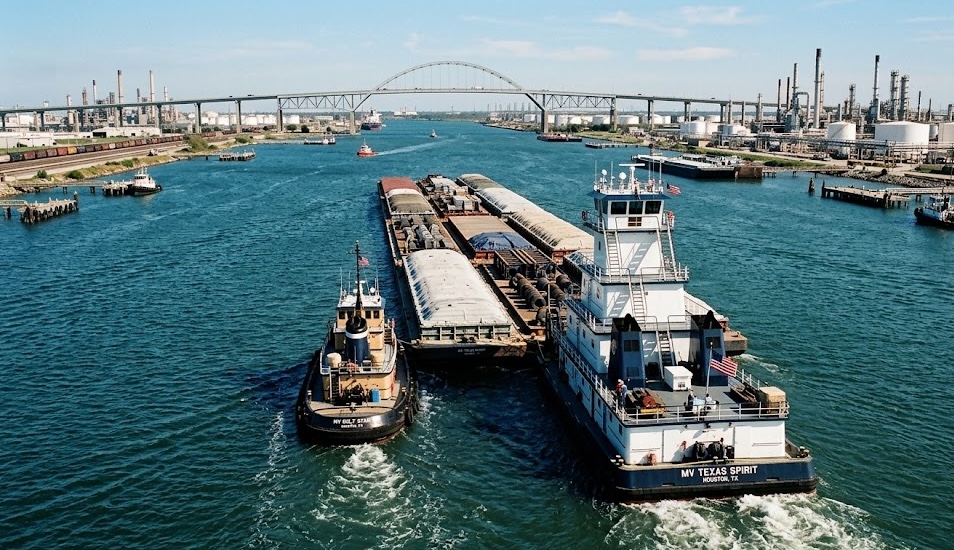
Hurt Working Offshore? You May Have a Jones Act Claim — Here’s What to Know
The Jones Act, 46 U.S.C. § 30104, gives qualified seamen — workers with a substantial connection to a vessel in navigation — the right to sue their maritime employers directly for negligence. Unlike standard workers’ compensation, the Jones Act allows full civil jury trial rights, uncapped damages, and a plaintiff-favorable negligence standard that requires only the slightest employer contribution to the injury. If you were hurt working offshore on a vessel, barge, towboat, supply vessel, or drillship, you may have rights that your employer is not going to volunteer to explain.
Who Qualifies as a Jones Act Seaman?
Not every offshore worker qualifies. The test comes from the U.S. Supreme Court’s decision in Chandris, Inc. v. Latsis, 515 U.S. 347 (1995), which established a two-part standard:
- Contribution to the vessel’s mission. The worker’s duties must contribute to the function of a vessel or the accomplishment of its mission.
- Substantial connection to a vessel in navigation. The worker must have a connection to a specific vessel — or an identifiable group of vessels — that is substantial in both duration and nature.
As a practical benchmark, courts apply a rough 30% guideline: workers who spend at least 30% of their working time aboard vessels in navigation generally qualify. The Fifth Circuit’s 2021 en banc decision in Sanchez v. Smart Fabricators of Texas refined the analysis, directing courts to also consider whether the worker owes allegiance to the vessel rather than a shoreside employer, whether the work is genuinely sea-based, and whether the assignment is open-ended (sailing vessel to vessel) or limited to a single discrete task.
Deck hands, engineers, roustabouts, cooks, welders, and many other offshore workers qualify. So do workers on tugs, towboats, supply boats, drillships, and semi-submersible rigs. If your employer is telling you that workers’ compensation is your only option, that characterization may be wrong — and it is worth a conversation with one of our maritime attorneys before accepting it.
Maintenance and Cure — Benefits You May Be Owed Right Now
Even before a Jones Act negligence case is filed or evaluated, maintenance and cure is likely available to you from the date of your injury.
- Maintenance covers your daily living expenses — rent or mortgage, utilities, food — while you are unable to work due to a work-related maritime injury. Employers routinely offer maintenance at $40 per day, which significantly undervalues most workers’ actual living costs. An attorney can challenge that rate based on your documented monthly expenses and push it substantially higher.
- Cure covers all reasonable and necessary medical expenses from the date of injury until you reach maximum medical improvement (MMI) — the point at which further treatment is unlikely to improve your condition. There is no dollar cap on cure. The employer pays it regardless of who was at fault.
Both benefits are available regardless of fault. An employer who unreasonably withholds, delays, or cuts off maintenance and cure can face additional penalties under maritime law on top of the underlying negligence claim. If your employer or its insurer has stopped paying your medical bills or is delaying treatment, contact a maritime attorney immediately.
The Jones Act Negligence Standard — Why It Favors Injured Workers
To win a Jones Act negligence claim, an injured seaman need only prove that the employer’s negligence played any part — even the slightest part — in causing the injury. Courts have applied that standard literally. Even a minor employer failure that contributed to the conditions leading to an accident can support a full recovery. This is dramatically more favorable to injured workers than the causation standard in an ordinary Texas personal injury case.
Common bases for Jones Act negligence claims include: unsafe working conditions aboard the vessel; inadequate crew size; faulty or poorly maintained equipment; excessive working hours and fatigue; failure to train or supervise crew members; and failure to conduct adequate rescue operations after an offshore injury.
Unseaworthiness — A Second Independent Path to Recovery
In addition to Jones Act negligence, injured seamen can bring a separate claim for unseaworthiness under the general maritime law. A vessel is unseaworthy when the vessel itself — or its equipment, condition, or crew — is not reasonably fit for its intended purpose. Unseaworthiness is an absolute liability doctrine: no fault is required. If the condition of the vessel contributed to the injury, the vessel owner is responsible regardless of whether it knew about the problem. Both claims can be brought in the same lawsuit, and the jury can consider both.
The Three-Year Statute of Limitations
Jones Act claims must be filed within three years of the date of injury under 46 U.S.C. § 30106. Three years is the outer limit — not the target. Evidence aboard vessels is uniquely vulnerable to loss. Voyage logs, maintenance records, crew rosters, equipment inspection histories, and post-incident company investigations can disappear or be altered before you have legal representation in place. Contact a maritime attorney as soon as possible after any offshore injury — not at the two-year or three-year mark.
What to Do After an Offshore Injury — A Practical Checklist
If you are injured or hurt offshore, here is a practical checklist of the actions you should take immediately to preserve your rights:
- Get medical care immediately. Document every symptom, every treatment, and every limitation on your ability to work.
- Report the incident. Report both the incident and the injury to your supervisor in writing and keep a copy of the report.
- Do not sign anything. This includes releases, medical authorization forms, or settlement offers from the company or its insurer without speaking to an attorney first.
- Document the facts. Write down everything you remember about the incident — location on the vessel, what you were doing, who was present, what the conditions were — while the details are fresh.
- Contact a Jones Act attorney. Do this as soon as possible, before the company’s investigation takes control of the evidence.
Frequently Asked Questions
Do I qualify as a Jones Act seaman?
You likely qualify if you contribute to a vessel’s function and spend at least 30% of your working time aboard vessels in navigation. Deck hands, engineers, roustabouts, and crew on tugs, barges, and supply vessels often qualify. A Jones Act attorney can evaluate your specific situation.
What is maintenance and cure?
Maintenance covers daily living expenses while you are injured and unable to work. Cure covers all necessary medical costs until maximum medical improvement. Both are owed regardless of fault and begin from the date of injury.
How long do I have to file a Jones Act claim?
Three years from the date of injury under 46 U.S.C. § 30106. However, evidence disappears quickly aboard vessels. Contact a maritime attorney as soon as possible — do not wait.
What is the difference between the Jones Act and workers’ compensation?
Workers’ comp provides fixed administrative benefits with no jury trial. The Jones Act allows a full civil trial with uncapped damages and requires only the slightest employer negligence to win. They are fundamentally different — and your employer may not tell you which applies.
What if my employer disputes that I qualify as a seaman?
Seaman status is ultimately a factual question decided by a jury. Employers routinely dispute it because it determines whether the Jones Act applies. A maritime attorney’s evaluation of your specific job duties and vessel connection is essential before accepting the employer’s position.
Hurt Offshore? The Jones Act Gives You More Rights Than You May Know.
Greenberg Streich attorney Mike Streich worked on the defense side of maritime cases for years — including Deepwater Horizon litigation and in-house work for an offshore construction company — before switching to the plaintiff side. He knows how maritime employers and their insurers evaluate offshore injury claims, how they dispute seaman status and maintenance rates, and how they structure pre-suit negotiations to minimize payouts. The firm’s lawyers have recovered more than $400 million for injured clients, including a $16 million maritime result.
Maritime employers do not volunteer the full scope of an injured seaman’s rights. Greenberg Streich Injury Lawyers handles Jones Act cases throughout Texas, charges no fee unless the firm wins, and offers free, confidential consultations. If you or a family member was injured working offshore, call 832-583-3471 or contact us today.