18-Wheeler Accident Lawyer Sugar Land, TX
If you or someone in your family has been struck by an 18-wheeler in Sugar Land, the injuries are probably severe. A loaded semi-truck can weigh 80,000 pounds. Your car weighs maybe 4,000. When those two vehicles collide, physics determines the outcome—and physics doesn’t favor the smaller vehicle.
Greenberg Streich Injury Lawyers represents families devastated by 18-wheeler crashes throughout Fort Bend County and the Texas Gulf Coast. Our Sugar Land, TX 18-wheeler accident lawyer team includes attorneys who have seen these cases from both sides. Mike Streich spent years defending trucking companies and their insurers. He knows what they’re doing right now to limit your recovery. Matt Greenberg has secured record verdicts against corporate defendants who thought they could outspend injured families.
The trucking industry treats serious injury claims as a cost of doing business. We make sure that cost reflects the true damage they’ve caused.
Why Choose Greenberg Streich For 18-Wheeler Accident Cases In Sugar Land, Texas?
Inside Knowledge Of Trucking Defense Tactics
Mike Streich didn’t learn about trucking litigation from textbooks. He learned it by defending the companies and insurers you’re now up against. For nearly a decade, he represented Lloyd’s of London syndicate members and major corporations in catastrophic injury cases—including commercial motor vehicle crashes that killed and maimed people across Texas.
He participated in the strategy sessions where defense teams decided how to attack injury claims. He watched adjusters calculate what they thought families would accept versus what cases were actually worth. He saw how trucking companies preserve evidence that helps them and let evidence that hurts them disappear. That experience now works for injured families instead of against them.
Mike graduated cum laude from the University of Houston Law Center and has earned the Texas Rising Star designation from Super Lawyers multiple times. More importantly, he understands how the other side thinks—because he used to be the other side.
A Track Record That Changes Calculations
When trucking companies evaluate claims, they consider who they’re facing. Some attorneys settle everything. Others fight. Matt Greenberg has built a 12-year reputation as a Sugar Land, TX personal injury lawyer who takes cases to trial when defendants won’t offer fair compensation.
He holds the record for the largest personal injury settlement in Tarrant County. He secured the largest verdict in Montgomery County. Other law firms refer their most complex cases to him when they need someone willing to go the distance. Media outlets including ABC, FOX, CBS, and Texas Lawbook have featured his work. Defense attorneys know his name—and they adjust their evaluations accordingly.
Exposed To These Cases, Prepared For Yours
18-wheeler litigation isn’t like handling a fender-bender. These cases involve federal regulations, multiple corporate defendants, sophisticated insurance coverage, and defense teams with virtually unlimited resources. We match that sophistication. We engage accident reconstruction specialists. We retain biomechanical engineers. We hire economists to calculate lifetime damages. We build cases designed to win at trial—which is exactly why most of them settle for full value before we get there.
Results That Reflect Our Commitment
Our attorneys have recovered hundreds of millions of dollars for injured Texans. In trucking and commercial vehicle cases, our case results include:
- $35 million – Truck accident wrongful death (largest recorded Tarrant County settlement)
- $9.75 million – Truck accident
- $6 million – Commercial motor vehicle wrongful death
- $5.5 million – Truck accident
- $4 million – Truck accident
These outcomes required preparation, resources, and willingness to reject inadequate offers. Every case is different, but our approach stays consistent: we fight for what our clients actually deserve.
No Upfront Cost To Hire Us
We handle 18-wheeler cases on contingency. You pay no attorney fees unless we recover compensation for you. We advance all litigation costs—accident reconstruction, professional witnesses, depositions, document production. If we don’t win, you owe us nothing. This structure exists because catastrophic injuries shouldn’t prevent families from accessing quality legal representation.
⭐⭐⭐⭐⭐
“I can’t say enough about how incredible Matt and Mike were throughout my entire case. From day one, they were professional, attentive, and truly invested in fighting for me. They didn’t just show up—they showed out. Their knowledge, confidence, and strategy were clear every step of the way, and because of their hard work, we won.” — Kristy Sims
Types Of 18-Wheeler Accident Cases We Handle In Sugar Land
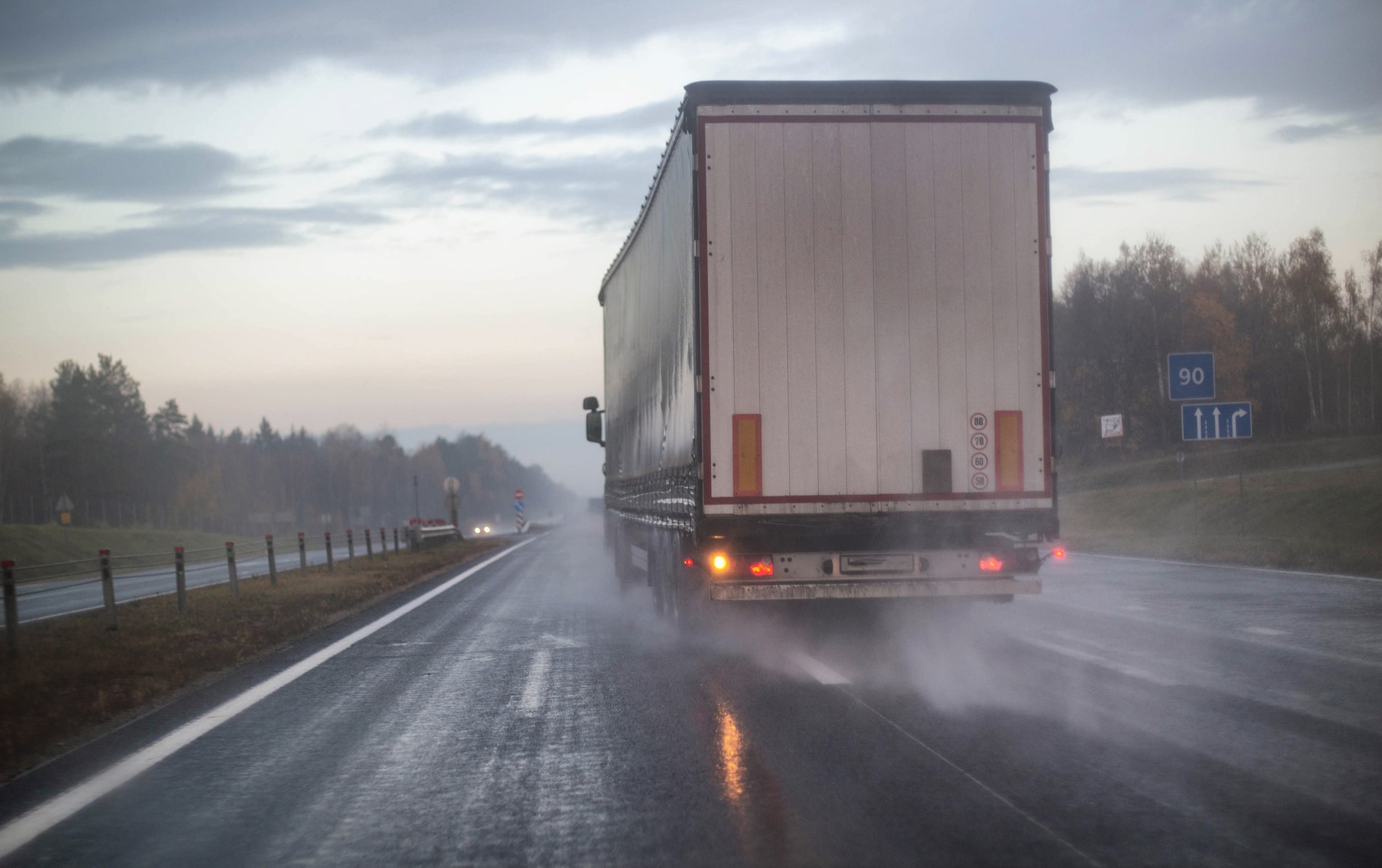
Semi-trucks create dangers that ordinary vehicles simply don’t. Their size, weight, stopping distance, and blind spots make them capable of catastrophic damage even when traveling at moderate speeds. We represent victims of 18-wheeler crashes throughout Sugar Land, TX and Fort Bend County.
- Rear-end collisions. When an 80,000-pound truck rear-ends a stopped or slowing vehicle, the smaller vehicle gets crushed. Occupants suffer catastrophic injuries—spinal cord damage, traumatic brain injuries, internal organ damage. Many don’t survive. These crashes often result from distracted driving, following too closely, or brake failures that proper maintenance would have prevented.
- Underride accidents. Passenger vehicles can slide beneath truck trailers in certain collision angles, shearing off the top of the car and killing occupants instantly. Federal law requires rear underride guards, but side underride protection remains largely voluntary despite years of advocacy. These crashes frequently become wrongful death claims.
- Jackknife crashes. When a truck’s trailer swings outward at an angle to the cab, it can sweep across multiple lanes of traffic, striking vehicles that have no chance to react. Jackknifing typically results from braking errors, slick roads, or improper load distribution. The trailer becomes a massive weapon swinging through traffic.
- Wide turn accidents. 18-wheelers need extra space to turn right. Drivers who misjudge clearances—or who fail to check mirrors adequately—crush vehicles, cyclists, and pedestrians caught between the trailer and the curb. These accidents happen frequently in urban areas where trucks share roads with dense traffic.
- Tire blowouts. Commercial truck tires operate under enormous stress. When they fail at highway speed, drivers can lose control entirely. Debris from blown tires also creates secondary hazards for following vehicles. Proper inspection and replacement schedules prevent most blowouts, but cost-cutting leads some carriers to push tires beyond safe limits.
- Rollovers. Top-heavy loads, excessive speed on curves, and sudden maneuvers can cause 18-wheelers to roll. A rolling semi-truck destroys everything in its path. Improperly secured cargo shifts during transport, changing the vehicle’s center of gravity and increasing rollover risk.
- Blind spot collisions. 18-wheelers have massive blind spots on all four sides—areas where the driver simply cannot see other vehicles. Lane changes become deadly when trucks move into space already occupied by cars. While drivers bear responsibility for checking blind spots, the fundamental limitation creates ongoing danger for everyone sharing the road.
- Runaway truck accidents. Brake failure on grades can leave drivers with no way to stop 80,000 pounds of momentum. Runaway truck ramps exist for exactly this reason, but not every road has them—and not every driver reaches them in time. These crashes typically reflect maintenance failures or mechanical defects.
Texas Legal Requirements For 18-Wheeler Accident Claims
Commercial trucking operates under federal regulations that don’t apply to ordinary drivers. Understanding this regulatory framework helps establish liability when things go wrong.
Federal Motor Carrier Safety Regulations
The Federal Motor Carrier Safety Administration oversees interstate trucking through detailed safety standards covering driver qualifications, vehicle maintenance, hours of service, cargo securement, and drug testing. Violations of these regulations can establish negligence per se—meaning the trucking company is automatically considered negligent if a regulatory breach contributed to your crash.
Hours-of-service rules limit consecutive driving time to prevent fatigue-related accidents. Under current FMCSA standards, drivers cannot operate commercial vehicles more than 11 hours after 10 consecutive hours off duty. They cannot drive beyond the 14th hour after coming on duty. These limits exist because exhausted drivers cause crashes. When companies pressure drivers to violate hours limits—or when electronic logging devices get manipulated—people can get hurt, or even die.
Multiple Potentially Liable Parties
18-wheeler crashes often involve more defendants than the driver who hit you. The trucking industry’s corporate structure creates multiple potential sources of liability and insurance coverage:
- The driver may be personally liable for negligent operation
- The motor carrier typically bears responsibility for the driver’s actions and for its own negligent hiring, training, or supervision
- Freight brokers who arranged the shipment may share fault if they hired carriers with poor safety records
- Cargo loaders face liability when improperly secured freight causes accidents
- Maintenance providers answer for mechanical failures their inspections should have caught
- Truck and component manufacturers bear responsibility for defective equipment
- Trailer owners in lease arrangements may have independent duties
Identifying every responsible party expands available insurance coverage and ensures full accountability. We investigate the entire chain of responsibility—not just the obvious defendants.
Texas Statute Of Limitations
Personal injury claims in Texas must generally be filed within two years under Section 16.003 of the Civil Practice and Remedies Code. But waiting anywhere near that deadline is a mistake. Evidence in trucking cases disappears quickly. Electronic logging data gets overwritten. Onboard computer information cycles out. Witnesses become harder to locate. The trucking company’s defense solidifies while your evidence deteriorates.
Comparative Fault Rules
Texas applies modified comparative fault under Chapter 33 of the Civil Practice and Remedies Code. If you bear partial responsibility for the crash, your recovery gets reduced proportionally. If you’re more than 50 percent at fault, you recover nothing. Defense teams routinely try to shift blame onto injured victims—claiming you were speeding, following too closely, or made some other error that contributed to the collision. We counter these arguments with evidence and professional testimony.

Damages In Sugar Land 18-Wheeler Accident Cases
Economic Damages
18-wheeler crashes cause injuries requiring extensive—and expensive—medical treatment. Economic damages compensate you for measurable financial losses:
Medical expenses form the largest component for most victims. Emergency surgery, trauma center stays, multiple hospitalizations, rehabilitation, ongoing therapy, prescription medications, medical equipment, home health care. Severe injuries generate bills reaching six or seven figures. Future medical needs must be calculated and included—you shouldn’t have to pay out of pocket for care you’ll need years from now because of someone else’s negligence.
Lost income covers wages you’ve already missed and earning capacity you’ve permanently lost. Many 18-wheeler crash survivors can never return to their previous occupations. A warehouse worker who suffers a spinal injury can’t go back to physical labor. The difference between what they could have earned and what they can earn now—calculated over the remainder of their working life—represents substantial damages.
Other economic losses include property damage, transportation costs for medical appointments, home modifications required by disability, and household services you can no longer perform yourself.
Non-Economic Damages
Physical pain accompanies catastrophic injuries. Broken bones, internal damage, burns, crush injuries—the suffering is real and ongoing. Surgery hurts. Recovery hurts. Living with permanent disabilities involves daily discomfort that may never fully resolve.
Mental anguish affects nearly every 18-wheeler crash survivor. Anxiety about driving. Nightmares replaying the collision. Depression from lost capabilities. PTSD symptoms triggered by traffic situations. Fear that never quite goes away. The psychological toll is as real as physical injuries, even if it doesn’t show on x-rays.
Loss of enjoyment encompasses activities you can no longer pursue. Hobbies you loved. Sports you played. Time with family without pain or limitation. The life you had before the crash may be gone permanently.
Disfigurement from scarring, amputation, or other visible injuries affects how you see yourself and how others see you. These changes extend beyond physical function into identity and self-worth.
Punitive Damages
When defendants act with gross negligence—conscious disregard for safety—Texas law permits punitive damages under Chapter 41 of the Civil Practice and Remedies Code. Trucking companies that falsify safety records, knowingly employ unqualified drivers, or deliberately ignore maintenance requirements may face punitive exposure beyond compensatory damages.
Sugar Land, TX 18-Wheeler Accident Statistics
Large trucks present an outsized danger on Texas roads. The numbers reflect that reality.
According to FMCSA data, fatal crashes involving large trucks and buses increased 26.4 percent nationally between 2016 and 2022. The agency’s Crash Causal Factors Program identifies heavy-duty trucks—Class 7 and Class 8 vehicles including most 18-wheelers—as responsible for approximately 70 percent of fatal crashes involving large trucks.
TxDOT crash statistics consistently show Texas among the states with the highest commercial vehicle crash totals. The state’s size, interstate highway network, and concentration of freight movement make truck crashes a persistent problem. Fort Bend County sees significant commercial traffic on Highway 59, Highway 6, and connecting routes that link Sugar Land to Houston’s industrial areas and the Port of Houston.
The NHTSA Fatality Analysis System tracks crash circumstances nationwide. Data consistently shows that occupants of passenger vehicles account for the vast majority of deaths in crashes involving large trucks. The size disparity makes this inevitable—truck occupants survive collisions that kill everyone in the smaller vehicle.
These statistics represent real people. Real families destroyed by preventable crashes. The numbers should be lower. They’re not because the trucking industry prioritizes speed and profit over safety.
Sugar Land, TX 18-Wheeler Accident FAQs
How Is An 18-wheeler Case Different From A Regular Car Accident Case?
Scale and complexity. 18-wheeler crashes typically cause far more severe injuries, involve federal regulations that don’t apply to ordinary drivers, include multiple potentially liable parties, and face defense teams with substantial resources. Insurance coverage is usually much higher—but so is the resistance to paying it. These cases require attorneys with specific experience in commercial trucking litigation.
The Trucking Company’s Insurance Adjuster Contacted Me. Should I Talk To Them?
Be extremely cautious. Adjusters work for the insurance company, not for you. Their goal is minimizing what the company pays. Anything you say can be used to reduce your claim. Recorded statements often get parsed for admissions that hurt your case. Before speaking with any adjuster, consult an attorney who can advise you on what to say—and what not to say.
What Evidence Is Most Important In 18-wheeler Cases?
Electronic data is critical. The truck’s event data recorder captures speed, braking, and other metrics before impact. Electronic logging devices show hours of service. GPS records reveal the truck’s route and timing. All of this data can be overwritten or lost if not preserved quickly. Beyond electronics, driver qualification files, maintenance records, cargo documentation, and dispatch communications all matter. We send preservation demands immediately to prevent evidence destruction.
Can I Sue The Trucking Company, Or Just The Driver?
Usually both—and potentially others. Motor carriers typically bear responsibility for their drivers’ actions under respondeat superior. They may also face direct liability for negligent hiring, training, supervision, or maintenance. Depending on the circumstances, freight brokers, cargo loaders, maintenance providers, and equipment manufacturers may share responsibility. We investigate thoroughly to identify every defendant with potential liability.
What If The Truck Driver Was An Independent Contractor?
Trucking companies sometimes claim drivers are independent contractors to avoid liability. Texas courts look beyond labels to examine actual control and the relationship between parties. Many “independent contractor” arrangements are really employment relationships dressed up to shift risk. We analyze the specific facts to determine who actually bears responsibility.
Steps To Take After An 18-Wheeler Accident In Sugar Land, TX
At The Scene
Get medical attention immediately—even if you feel okay. Adrenaline masks pain. Internal injuries don’t always produce immediate symptoms. Head injuries can seem minor at first and become life-threatening. Let emergency responders evaluate you and transport you to a hospital if they recommend it.
If you’re physically able, document everything. Photograph the vehicles, the scene, the road conditions, the weather, any visible damage. Get the truck’s DOT number and the name of the trucking company from the cab door. Collect contact information from witnesses. Note the truck driver’s name and employer.
Request a copy of the police report when it becomes available. Report the accident to your own insurance company with basic factual information—but don’t speculate about fault or make recorded statements without consulting an attorney.
In The Days Following
Follow up with your own physician, not just emergency room doctors. Create a medical record you control with a provider who answers to you. Document all symptoms, even ones that seem minor. Follow every treatment recommendation—gaps in treatment become ammunition for defense attorneys.
Keep detailed records of everything: medical bills, missed work, medications, symptoms, limitations on daily activities. Write things down while they’re fresh. Memories fade. Contemporaneous notes carry more weight than later recollections.
Don’t sign anything from the trucking company or their insurer without having an attorney review it. Early settlement offers almost never reflect the full value of serious injuries. Documents that look routine may contain waivers or admissions that damage your case.
Before Filing A Claim
Contact an attorney experienced in 18-wheeler litigation immediately. Evidence preservation is time-sensitive. Electronic data gets overwritten. Witnesses become harder to find. The trucking company is already building its defense. You need someone building yours. We can help you understand what to do after a serious accident and guide you through the process.
Dangerous Locations For 18-Wheeler Accidents Near Sugar Land
Commercial truck traffic flows through Sugar Land on routes connecting Houston’s industrial and port facilities to destinations across Texas and beyond. High-risk areas include:
- Highway 59 (Southwest Freeway) carries heavy commercial traffic through Sugar Land, with truck-related crashes occurring regularly at interchanges and during congested periods
- Highway 6 sees significant truck traffic connecting Sugar Land to the Energy Corridor and industrial areas northwest of Houston
- Highway 90A serves commercial vehicles moving through Fort Bend County
- FM 1092 (Murphy Road) connects to industrial and commercial areas with substantial truck presence
- Intersection of Highway 59 and Highway 6 concentrates traffic in ways that increase collision risk
The Texas DPS crash records database allows public access to collision data throughout the state.
Local Resources For 18-Wheeler Accident Victims
- Memorial Hermann Sugar Land Hospital: 17500 West Grand Parkway South, Sugar Land, TX 77479 — Full emergency services for accident victims.
- Houston Methodist Sugar Land Hospital: 16655 Southwest Fwy, Sugar Land, TX 77479 — Level III trauma center capable of treating serious injuries.
- TIRR Memorial Hermann: 1333 Moursund St, Houston, TX 77030 — Nationally recognized rehabilitation for catastrophic injuries including spinal cord and brain trauma.
- FMCSA Safety Measurement System: The SMS database provides safety records, crash history, and inspection results for motor carriers—useful for identifying companies with problematic safety histories.
- Texas Department of Insurance: The TDI consumer portal provides resources for insurance-related questions and complaints.
- Fort Bend County District Clerk: The District Clerk’s office maintains court records and civil case filings.
Contact Greenberg Streich Injury Lawyers
18-wheeler crashes destroy lives. Survivors face months or years of recovery. Families lose breadwinners. Children grow up without parents. The trucking industry knows this—and still cuts corners on safety because the math works in their favor. Settlements and verdicts are just another cost of doing business.
We make that cost reflect the true damage.
If you or someone in your family was seriously injured in an 18-wheeler crash in Sugar Land or anywhere in the Houston area, contact us for a free consultation. We handle these cases on contingency—no fee unless we recover compensation for you.
Ourattorneys have recovered hundreds of millions of dollars for injured Texans in catastrophic cases. We welcomereferrals from attorneys who need experienced representation for commercial trucking claims. Past clients have shared their experiences intestimonials on our website, and you can learn more about our approach on ourfirm overview page.