Why Midland and Odessa Truck Accident Victims Recover Less Than They Should
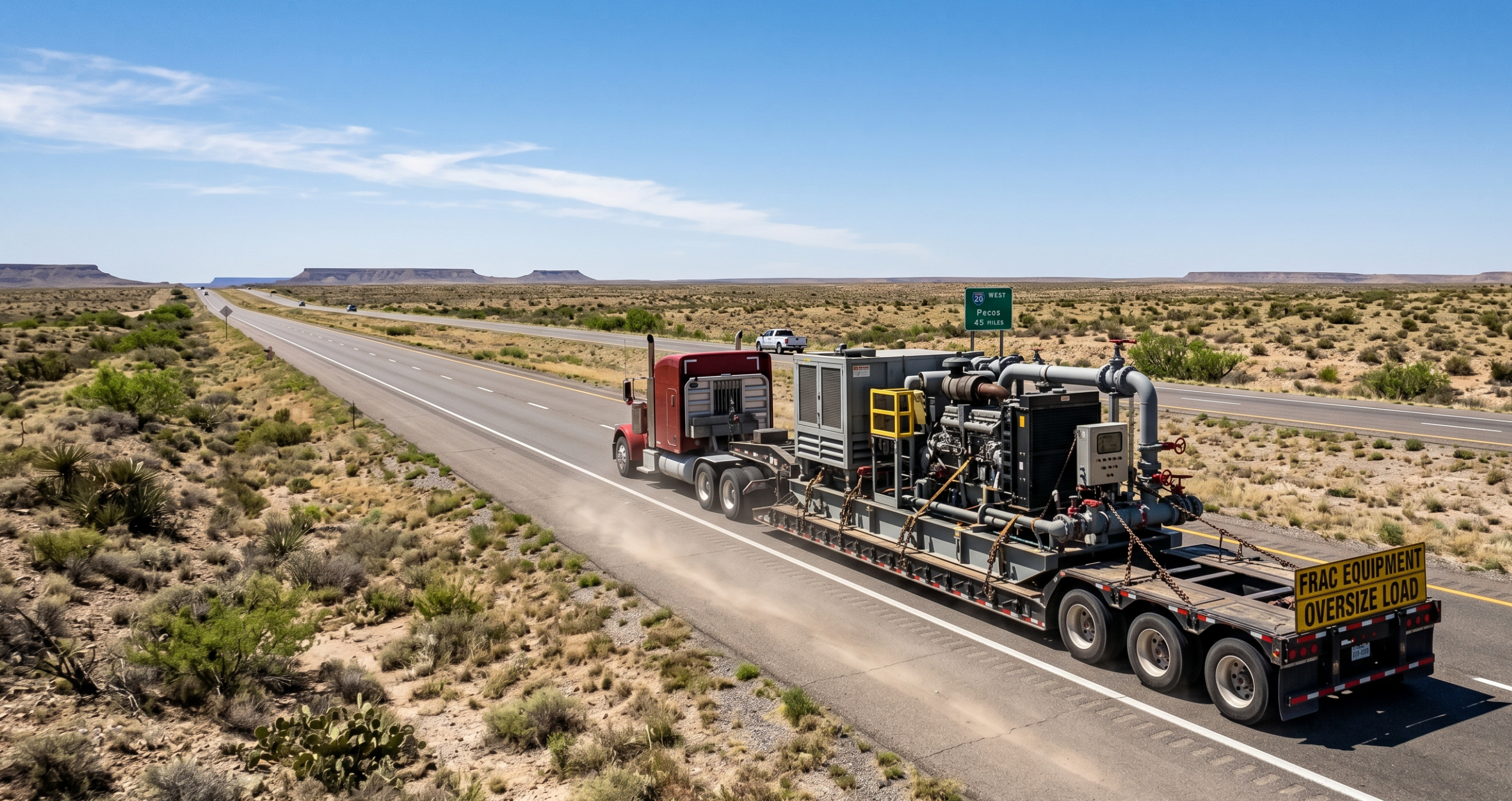
If you drive in Midland or Odessa, you know what the roads look like. Sand haulers, water trucks, flatbeds loaded with drill pipe, and long-haul 18-wheelers competing for space on I-20 and US-285. The Permian Basin generates more commercial truck traffic per capita than almost anywhere in Texas, and the crash data shows it.
According to TxDOT’s Crash Records Information Systems (CRIS) database, Midland and Ector counties combined reported 840 truck crashes in 2025, including 21 fatal crashes and more than 200 resulting in injuries. A separate analysis of federal crash data ranked Odessa first and Midland second in the state for fatal truck crashes per capita — worse than Houston, worse than Dallas, worse than any other Texas city. Crashes in the Permian Basin are roughly twice as likely to prove fatal as truck crashes elsewhere in Texas.
Those numbers explain why so many families reach out to a Midland or Odessa truck accident lawyer after a crash. What they don’t explain is why so many of those families end up recovering far less than their case is actually worth.
The crash itself isn’t the whole story. What happens in the hours and days after is where cases are built or broken. Most victims don’t know any of it until it’s too late.
Why Permian Basin Truck Crashes Are Different From Other Texas Cases
Truck accident claims in Midland and Odessa aren’t like truck cases in Houston or Dallas. The oilfield context creates complications that most people never anticipate, and that most general injury attorneys never develop.
First, the carriers operating in West Texas are often oilfield contractors, not traditional freight haulers. The truck that hits you may carry one company’s logo on the door, be driven by an employee of a second company, and be hauling materials under contract to a third, an oil operator that controls the job schedule, the delivery route, and the pressure to deliver on time. In these situations, the carrier alone may not be the only party with liability. The operator may be on the hook too, but only if someone knows to look.
Second, the roads that see the most crashes in this region, US-285, SH-18, FM 1787, E County Road 120, have no traffic cameras. No nearby businesses with security footage. When a crash happens on a remote oilfield access road at 2 a.m., the only contemporaneous record of what happened may be inside the truck itself.
That data is exactly what carriers move to protect the moment a crash happens.
The Evidence Window Is Shorter Than Most People Realize
A commercial truck carries multiple data recorders. The Electronic Control Module (ECM), commonly called the black box, logs speed, brake application, throttle position, and engine performance in the seconds before impact. An Electronic Logging Device (ELD) tracks hours of service and GPS movement. Forward-facing and cab-facing cameras record what the driver saw and did.
These records can make or break a case. They are also temporary.
ECM data can be overwritten in as little as 14 days on some carrier systems. Dashcam footage records on a loop and overwrites itself within 14 to 30 days if not preserved. ELD records carry a federally mandated minimum retention period of six months, but other electronic data does not. Without a formal preservation demand, a carrier has no obligation to save any of it.
Trucking companies and their insurers send rapid response teams to serious crash scenes, sometimes within hours of the collision. These investigators photograph the scene, interview the driver, and begin building the company’s defense before most victims have left the emergency room. Their interest in that truck data runs in exactly the opposite direction from yours.
A formal spoliation letter, demanding that the carrier preserve all electronic data, maintenance records, driver qualification files, driver logs, and all internal communications related to the crash, needs to go out within 48 to 72 hours. Under Texas law, a carrier that destroys evidence after receiving a valid preservation demand can face serious court sanctions, including an adverse inference instruction telling jurors they may assume the destroyed evidence would have hurt the carrier. That instruction is powerful. It is also only available if the letter was sent before the evidence disappeared.
Mistakes Permian Basin Truck Crash Victims Often Make
The following mistakes are not rare. They come up in case after case across the Permian Basin. Each one directly reduces what a victim recovers.
1. Talking to the Carrier’s Adjuster Before Hiring a Lawyer
The carrier’s adjuster will call quickly. They are trained to be polite, even sympathetic. Their job is to close your claim as cheaply as possible before you understand what it is worth.
Anything you say about how the crash happened, your level of pain, your daily activities, gets documented and used against you later. In the first days after a serious crash, you often don’t have a complete picture of your injuries. A statement made before full medical workup can lock you into a description of your condition that benefits the carrier, not you.
- Don’t give a recorded statement.
- Don’t sign anything.
- Don’t discuss any settlement figure before speaking with an attorney who handles Texas 18-wheeler accidents.
2. Assuming Only the Driver and Carrier Are Liable
In oilfield trucking, liability rarely stops at the company whose name is on the truck.
The oil and gas operator that controls the job site, sets the delivery schedule, and dictates the pace of operations may bear independent liability when crashes result from production pressure, inadequate site safety, or dangerous access roads the operator controls. Cargo shippers, subcontractors, and even truck manufacturers can be additional defendants depending on the facts.
Most victims pursue only the driver and carrier. The deeper pockets, and the additional liability theories that come with them, go untouched.
3. Not Checking the Carrier’s Safety Violation History
The FMCSA maintains a publicly searchable Safety Measurement System (SMS) that shows every carrier’s inspection results, out-of-service orders, and violation patterns across the prior 24 months. A carrier’s DOT number is the only key required.
This matters for two reasons. First, a carrier’s prior violations are directly relevant to negligence in Texas courts. Second, a documented pattern of violations, hours-of-service failures, brake defects, overweight loads, can support a gross negligence claim, which opens the door to exemplary damages under Texas Civil Practice and Remedies Code section 41.003.
The Texas Department of Public Safety documented 50,931 trucking violations in the Permian Basin during 2024 alone. In May 2025, roughly 38% of commercial vehicles inspected in West Texas were placed out of service. Those numbers describe an industry that tolerates significant safety failures in this region. They are also public record, waiting to be used.
4. Settling Before You Know What Your Injuries Actually Cost
High-speed rural crashes on narrow West Texas roads produce injuries that don’t always present immediately. Spinal injuries, traumatic brain injuries, and internal trauma can worsen significantly in the weeks and months after the initial impact. Settling before a complete medical workup and clear prognosis is one of the most reliable ways victims permanently undervalue their claims.
Under Texas Civil Practice and Remedies Code section 16.003, the general personal injury statute of limitations is two years from the crash date. You have time to understand your injuries fully. The evidence window closes much faster than the legal deadline. There is no benefit to settling quickly, and there can be a serious financial cost.
5. Treating a Truck Case Like a Car Case
Federal FMCSA regulations governing commercial motor vehicles create liability theories that don’t exist in standard car crash cases.
Hours-of-service violations, driver qualification failures, negligent hiring and entrustment, inadequate carrier safety management, these are all independent theories of liability, each requiring its own evidence and each capable of substantially increasing case value. ELD data showing a driver exceeded federal driving limits can be the centerpiece of a liability argument. A carrier’s failure to screen a driver’s qualification file for prior DUI convictions or safety disqualifications can support a gross negligence finding.
An attorney who handles car accidents but not commercial truck cases often doesn’t develop these theories. The difference in outcome can be substantial.
What to Do After a Truck Crash in Midland or Odessa
If you’ve been in a crash involving a commercial truck in the Permian Basin, these steps matter immediately.
- Get medical care right away. Emergency response times on rural West Texas roads can be long. When you reach a hospital, get a complete evaluation. Do not minimize symptoms. Internal injuries and head trauma often don’t present fully at the scene.
- Call 911 and make sure a report is filed. On oilfield roads with no cameras and few witnesses, the official crash report may be the only independent account of what happened.
- Document the scene if you can safely do so. Photograph vehicle positions, road conditions, skid marks, the truck’s USDOT number and carrier name, license plates, and your visible injuries. Rural scenes are often cleared quickly.
- Do not speak to the carrier’s adjuster or insurer. Take their name and phone number. Refer all further contact to your attorney.
- Contact a Texas truck accident lawyer within 24 hours. The evidence preservation window does not pause for your recovery. The spoliation letter goes out within 48 to 72 hours or critical data may be gone.
- Do not sign anything before you understand the full scope of your injuries. This includes any release, settlement offer, or recorded statement request from the carrier or its insurer.
Frequently Asked Questions About Truck Accident Claims in Midland and Odessa
How long do I have to file a lawsuit after a truck crash in Midland or Odessa?
Under Texas Civil Practice and Remedies Code section 16.003, you generally have two years from the date of the crash to file a personal injury lawsuit. Wrongful death claims carry the same deadline running from the date of death. Missing this deadline typically bars your claim entirely. The two-year window gives you time to investigate and build your case. The evidence window, for black box data and dashcam footage, closes in days or weeks.
What is a spoliation letter and why does it matter in a Permian Basin truck crash case?
A spoliation letter is a formal preservation demand sent to the carrier and its insurer requiring them to save all crash-related evidence, including ECM data, ELD records, dashcam footage, driver qualification files, maintenance records, and internal communications. Once the carrier receives this letter, destroying evidence can result in court sanctions, including an instruction telling jurors they may assume the destroyed evidence would have hurt the carrier. The letter must go within 48 to 72 hours of the crash.
Can I sue the oil company, not just the trucking carrier?
In many Permian Basin crash cases, yes. When an oil and gas operator controls the job schedule, dictates the delivery route, or maintains the access roads where a crash occurs, that operator may be an additional defendant. This analysis is fact-specific and requires early investigation to establish the operator’s degree of control. It is one of the most commonly missed theories of recovery in Permian Basin truck cases.
What if the insurance adjuster says the settlement offer expires?
Settlement offers from a carrier’s adjuster are not final until you sign a release. Artificial deadlines are a tactic to close claims before victims understand their full value. An offer can be declined, and a new one negotiated. Do not sign a release before your attorney has reviewed the carrier’s safety record, the FMCSA violation history, and all applicable liability theories.
How much does it cost to hire a Midland or Odessa truck accident lawyer?
Greenberg Streich Injury Lawyers handles truck accident cases on a contingency fee basis. There is no upfront cost, and you pay nothing unless we recover compensation for you.
Does a carrier’s prior safety violations matter to my case?
Yes, directly. A pattern of documented violations, including hours-of-service failures, brake defects, and out-of-service orders that the carrier ignored, is relevant to both ordinary negligence and gross negligence in Texas. It shows the company knew about safety risks and kept operating anyway. Accessing this information through the FMCSA SMS database is one of the first steps any experienced truck accident attorney should take.
Contact Greenberg Streich Injury Lawyers After a Permian Basin Truck Crash
Midland and Odessa truck crash cases are not standard injury claims. The carriers operating in this region are experienced at protecting their position quickly. The evidence disappears fast, the corporate structures are layered, and the federal regulatory framework is a discipline unto itself.
Not only does Greenberg Streich Injury Lawyers have experience representing plaintiffs, but we also have experience on the defense side of these cases, representing trucking companies and their insurers. We know exactly how carrier defense teams approach Permian Basin crashes, what evidence they prioritize, and where most plaintiff cases leave money behind.
If you or a family member was seriously injured or killed in a commercial truck crash in Midland, Odessa, or anywhere in the Permian Basin, contact Greenberg Streich Injury Lawyers. The consultation is free. You pay nothing unless we recover.
Call 713-443-7000 or visit gsinjuryfirm.com.
At Greenberg Streich, when tragedy strikes, we strike back.