What to Do After a Maritime or Offshore Injury
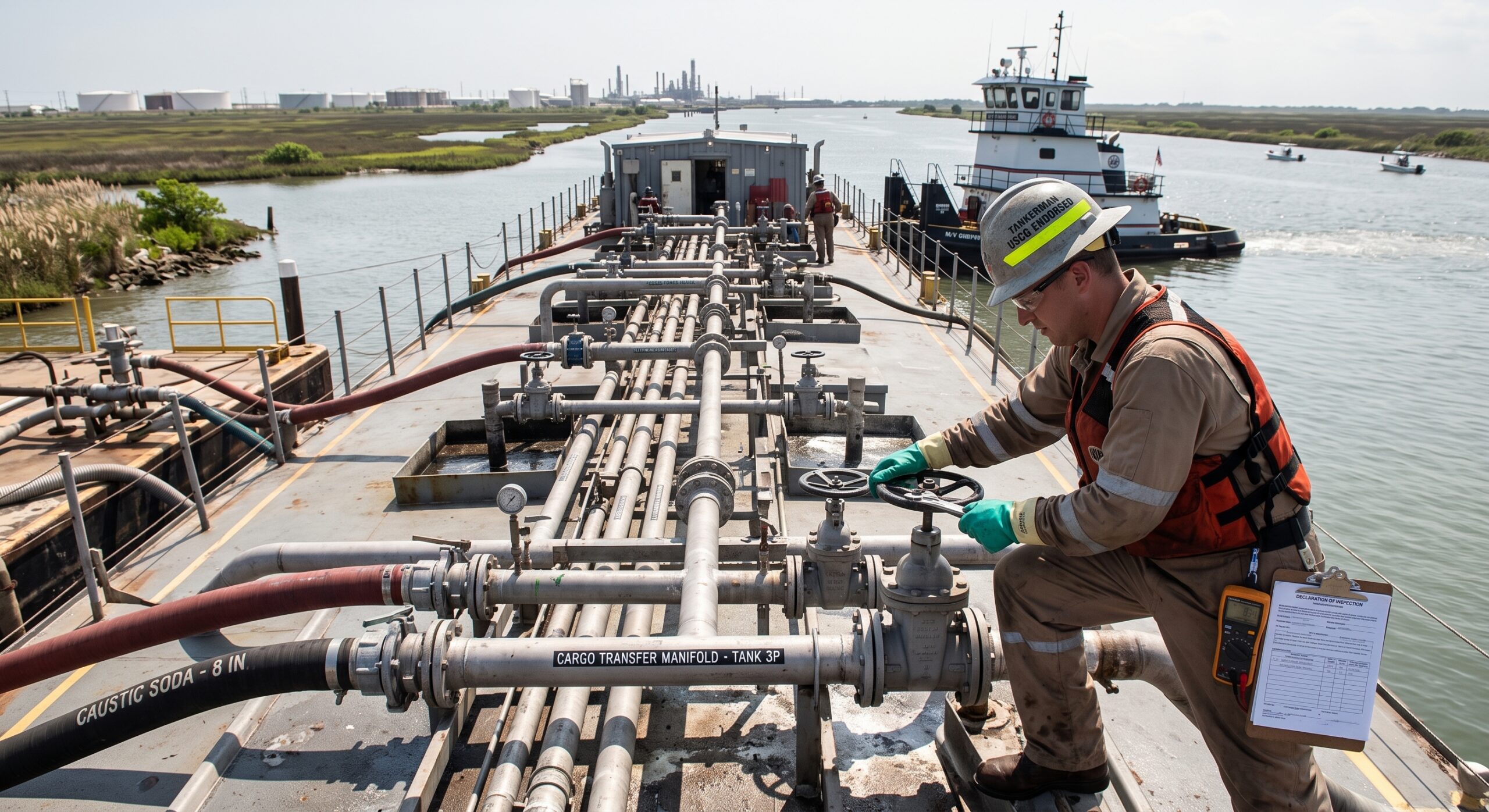
What Should You Do Right After a Maritime or Offshore Injury?
After a maritime or offshore injury, report the incident to the captain or person in charge in writing as soon as possible, seek a medical evaluation from a doctor you choose, and contact a maritime lawyer before giving any recorded statement or signing any release. Under the Jones Act (46 U.S.C. § 30104), injured seamen can sue their employer for negligence and are entitled to maintenance and cure (the employer’s obligation to pay living expenses and medical costs until maximum medical improvement), regardless of fault. Greenberg Streich Injury Lawyers represent Jones Act and offshore injury claimants across the Texas Gulf Coast, backed by a $16 million maritime recovery and more than $375 million in total results.
Key Takeaways
- Report your injury to the captain, master, or person in charge in writing immediately. Verbal reports can be denied or minimized later.
- You have the legal right to choose your own doctor. Do not rely solely on a company-appointed physician.
- The Jones Act (46 U.S.C. § 30104) gives injured seamen the right to sue their employer for negligence, with a jury trial, in state or federal court.
- Maintenance and cure requires your employer to pay daily living expenses and all medical costs until you reach maximum medical improvement, regardless of fault.
- Never give a recorded statement to the company, its insurer, or defense counsel before speaking with your own maritime lawyer.
- The statute of limitations on a Jones Act claim is three years from the date of injury, but critical evidence can disappear within days.
- Oil and gas extraction workers face a fatality rate seven times higher than the all-industry average.
Why Is Written Reporting So Critical After an Offshore Injury?
A written injury report creates a permanent, timestamped record that the employer cannot later deny or rewrite. Verbal reports are routinely disputed in maritime injury cases. Put the details in writing the same day, if possible.
Federal regulations under 46 CFR Part 4.05 require vessel owners and operators to report marine casualties to the U.S. Coast Guard, followed by a written report on Form CG-2692 within five days. Reportable casualties include any injury requiring professional medical treatment beyond first aid that renders the worker unfit to perform routine duties.
From the worker’s side, a written report locks in the date, time, location, and circumstances before memories shift. It also creates a document that defense counsel cannot credibly dispute at trial and triggers the employer’s legal obligation to provide maintenance and cure. If your employer hands you a company incident report form, fill it out, but also write your own account in a separate email or text message. Keep a copy.
Can You Choose Your Own Doctor After a Maritime Injury?
Yes. Under the Jones Act, injured seamen have the right to select their own physician. The employer cannot force you to use a company doctor, company medic, or company-selected clinic as your sole medical provider.
This distinction matters because company-appointed doctors work for the company. Their evaluations tend to minimize injuries, recommend early return-to-work dates, and produce medical records that favor the employer’s position at trial. An independent doctor evaluates you without that conflict of interest. Seek an independent medical evaluation as soon as you reach shore, even if you received emergency treatment offshore or during transport.
Many offshore employers pressure injured workers to see only the company physician or delay independent treatment by suggesting they will handle everything internally. That delay can hurt your claim. Your employer must pay for reasonable medical treatment through the doctrine of maintenance and cure, but that obligation does not give the employer the right to dictate who treats you.
What Is Maintenance and Cure, and Who Qualifies?
Maintenance and cure is a centuries-old maritime obligation that requires a vessel owner or operator to pay an injured seaman’s daily living expenses (maintenance) and medical costs (cure) until the seaman reaches maximum medical improvement (MMI). This obligation applies regardless of fault. Even if the worker caused the injury, the employer still owes maintenance and cure. Maintenance covers the daily cost of food and lodging the vessel would have provided had the seaman remained aboard. Cure covers all reasonable and necessary medical expenses, from emergency surgery to physical therapy to prescription medication.
Still, employers routinely deny or delay these benefits. Under the U.S. Supreme Court’s decision in Atlantic Sounding Co. v. Townsend, 557 U.S. 404 (2009), employers who unreasonably refuse to pay maintenance and cure can face punitive damages. That ruling gives injured seamen significant leverage when an employer stalls or underpays benefits that the law requires.
What Should You Document at the Scene of an Offshore Injury?
If you can do so safely, document the conditions that contributed to your injury before the employer has a chance to clean up, repair, or alter the scene. Photographs and witness names are the two most valuable pieces of evidence in any Jones Act case.
Photograph or record video of:
- The exact location where the injury occurred
- The equipment, machinery, or conditions involved
- Wet, oily, or slippery deck surfaces
- Missing guardrails, broken handrails, or defective equipment
- Warning signs (or the absence of them)
- Your visible injuries, including bruises, cuts, swelling, and burns
Get the full names and contact information of every coworker who witnessed the incident. Witnesses employed by the same company often become reluctant to cooperate once defense counsel gets involved. Write down names and phone numbers while they are still willing to talk. Preserve any personal gear or equipment damaged in the incident and do not let the company take possession without keeping your own photographic record.
Should You Give a Recorded Statement to the Company or Its Insurer?
No. Do not give a recorded statement to the company, its insurer, or any defense lawyer before speaking with your own maritime attorney. Recorded statements are not neutral fact-gathering exercises. They are tools designed to lock you into answers that can be used against you later.
Insurance adjusters know how to frame questions that minimize the severity of the incident, suggest pre-existing conditions, or imply the worker caused the injury. A recorded statement taken while the worker is in pain, medicated, or under pressure to keep a job rarely helps the injured seaman.
You are not legally required to give a recorded statement to the company’s insurer. Reporting the injury in writing is a separate obligation from submitting to a recorded interview. A Houston maritime injury lawyer can advise you on how to respond to these requests without jeopardizing your claim.
What Is the Jones Act and How Does It Protect Injured Workers?
The Jones Act (46 U.S.C. § 30104) is a federal statute that gives injured seamen the right to sue their employer for negligence. Unlike standard workers’ compensation, which limits an injured worker to scheduled benefits regardless of fault, the Jones Act allows a full negligence lawsuit with a jury trial in either state or federal court.
The negligence standard under the Jones Act is lower than in a typical personal injury case. The seaman does not need to prove the employer’s negligence was the sole cause or even the primary cause of the injury. The seaman needs only to show that the employer’s negligence played any part, even the slightest, in causing the injury. Courts call this the “featherweight” causation standard.
Beyond negligence, the Jones Act framework includes two additional protections. Maintenance and cure provides immediate financial support regardless of fault. The unseaworthiness doctrine holds the vessel owner strictly liable for any condition that makes the vessel unfit for its intended purpose, whether or not the owner knew about it.
The table below compares the legal protections available to offshore workers. (For context, the CDC’s Fatalities in Oil and Gas Extraction database recorded a fatality rate seven times higher than the all-industry average from 2014 to 2019.)
| Protection | Standard | Key Difference |
| Jones Act Negligence | Employer negligence, even slight | Full damages, jury trial, lower causation burden |
| Unseaworthiness | Vessel unfit for intended use | Strict liability; no need to prove employer knew |
| Maintenance and Cure | No fault required | Living expenses plus medical costs until MMI |
| Workers’ Comp (onshore) | No-fault scheduled system | Limited benefits, no jury trial, no negligence claim |
Who Qualifies as a “Seaman” Under the Jones Act?
To qualify as a seaman, a worker must satisfy the two-part test the U.S. Supreme Court established in Chandris, Inc. v. Latsis, 515 U.S. 347 (1995). First, the worker’s duties must contribute to the function or mission of a vessel in navigation. Second, the worker must have a connection to a vessel, or an identifiable fleet of vessels, that is substantial in both nature and duration.
Courts generally require that a worker spend roughly 30% or more of working time aboard a vessel or fleet, though the figure is a guideline. Roles that frequently qualify include deckhands, able seamen, engineers, vessel cooks, captains, pilots, divers working from vessels, and workers on mobile offshore drilling units (MODUs) classified as vessels. Workers on fixed oil platforms typically fall under the Longshore and Harbor Workers’ Compensation Act (LHWCA) instead. An offshore injury attorney can evaluate seaman status based on the specific facts of the case.
How Long Do You Have to File a Jones Act Claim?
The statute of limitations for a Jones Act negligence claim is three years from the date of injury, as set by 46 U.S.C. § 30106. For unseaworthiness claims brought under general maritime law, courts in the Fifth Circuit apply the same three-year period. Maintenance and cure claims generally carry a three-year limitations period as well.
Three years sounds like a long window, but critical evidence disappears fast. Vessel logs, safety reports, and equipment inspection records are routinely destroyed after short retention periods. Surveillance footage gets overwritten. Witnesses transfer to different rigs or leave the industry. A maritime attorney can send a preservation letter demanding that all evidence be retained, a step that carries real legal consequences if the employer destroys documents after receiving it.
What Mistakes Should Offshore Workers Avoid After an Injury?
The most damaging mistakes happen in the first 48 hours. Offshore workers often underreport injuries, delay treatment, or cooperate with the company’s investigation without understanding that the company’s interests and the worker’s interests are not aligned.
Common mistakes include:
- Reporting the injury verbally but not in writing, leaving no documented proof
- Accepting the company doctor’s evaluation without seeking an independent opinion
- Giving a recorded statement to the company or its insurer without legal counsel
- Signing a release or settlement offer before understanding the full extent of the injury
- Posting about the injury on social media, where defense counsel monitors every word
- Failing to photograph the scene or collect witness names while still on the vessel
- Assuming workers’ compensation covers the injury when a Jones Act claim would provide greater recovery
If you or a family member suffered a maritime or offshore injury on a vessel, rig, or platform in Texas waters or the Gulf of Mexico, Greenberg Streich Injury Lawyers offers free, confidential consultations. You pay nothing unless the firm wins. Call 832-583-3471 or contact us to speak with an attorney about your Jones Act or offshore injury case today.
Frequently Asked Questions
How long do I have to file a Jones Act claim in Texas?
Jones Act negligence claims carry a three-year statute of limitations from the date of injury. Evidence degrades fast after an offshore incident, so contact a maritime attorney as soon as possible.
What is maintenance and cure?
Maintenance and cure is the employer’s duty to pay an injured seaman’s daily living expenses and all medical costs until maximum medical improvement, regardless of who was at fault.
Can my employer force me to see a company doctor after an offshore injury?
No. Injured seamen have the right to choose their own physician under the Jones Act. The employer must pay for reasonable medical treatment through maintenance and cure.
Do I have to give a recorded statement to the company’s insurer?
No. You must report the injury, but you are not required to submit to a recorded interview. Speak with a maritime lawyer before giving any statement.
What if I work on a fixed platform instead of a vessel?
Workers on fixed platforms may not qualify as Jones Act seamen, but they may have claims under the LHWCA or general maritime law. A maritime attorney can evaluate the facts.
How much is a maritime injury case worth in Texas?
Case value depends on injury severity, lost earnings, medical costs, and the strength of the negligence or unseaworthiness evidence. Greenberg Streich Injury Lawyers have secured a $16M maritime recovery.
Hurt in a Maritime or Offshore Incident? Call Greenberg Streich Injury Lawyers.
Maritime and offshore workers who suffered injuries on a vessel, drilling rig, or platform should speak with counsel who handles Jones Act and offshore injury cases every day. Greenberg Streich Injury Lawyers provides a free, confidential case evaluation, and the firm charges no fee unless it wins. Reach an attorney directly at 832-583-3471 or contact us.