Oilfield Truck Accidents: Overlooked Causes of West Texas Crashes
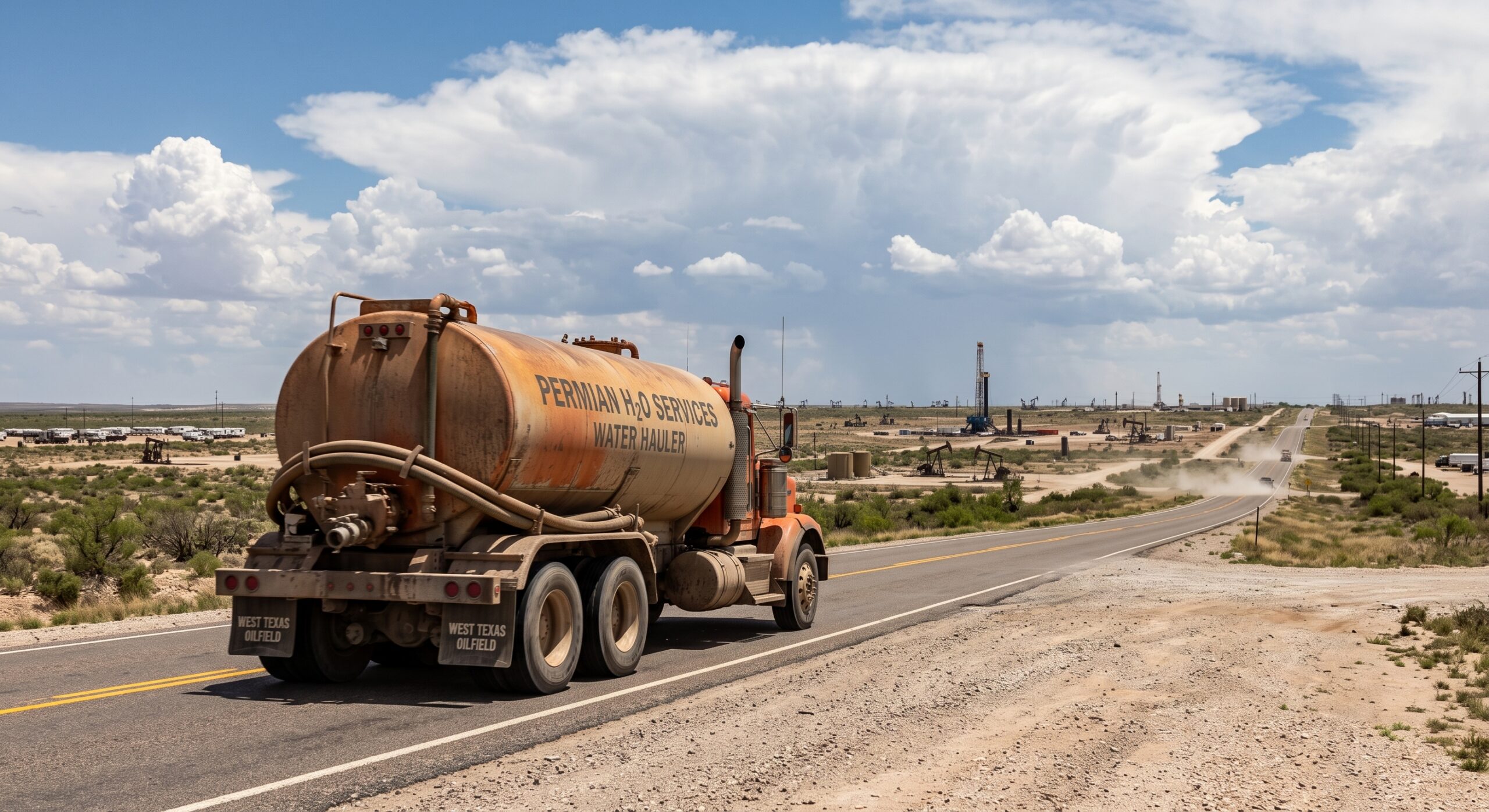
Oilfield Truck and 18-Wheeler Accidents: The Overlooked Causes of West Texas Crashes
Oilfield truck accidents in West Texas are not standard 18-wheeler crashes. The Permian Basin’s crash fatality rate runs nearly double the Texas statewide average, and commercial trucks factor into nearly half of all fatal crashes in the region. Federal hours-of-service exemptions for oilfield drivers, overloaded vehicles on roads that were never built for heavy traffic, and rapid-hire driver pools during boom cycles create crash risks unique to the Permian. Greenberg Streich Injury Lawyers represent oilfield truck accident victims across Texas, backed by a $20 million oilfield recovery and more than $375 million in total results.
Key Takeaways
- The Permian Basin’s crash fatality rate is nearly double the Texas statewide average, with commercial trucks involved in nearly 50% of fatal crashes in the region.
- FMCSA regulations at 49 CFR 395.1(d) allow oilfield drivers a 24-hour restart instead of the standard 34-hour restart, increasing fatigue risk on West Texas highways.
- Water haulers, frac sand trucks, and crude oil tankers carry loads that make them harder to stop and more destructive in a collision than standard freight.
- Many Permian Basin county roads were designed for light agricultural traffic, not the constant heavy-truck loads that oilfield operations demand.
- Oilfield trucking companies that hire unqualified drivers to meet boom-cycle demand can face negligent hiring and negligent entrustment claims under Texas law.
- Multiple parties may be liable in an oilfield truck crash: the driver, the motor carrier, the oilfield operator, and the equipment owner.
- Texas imposes a two-year statute of limitations on personal injury claims, and critical truck crash evidence can disappear within days.
Why Do Oilfield Trucks Crash More Often in the Permian Basin?
The Permian Basin accounts for over 10% of all Texas traffic deaths despite holding less than 2% of the state’s population. Commercial vehicles are involved in nearly 50% of fatal crashes in the region, roughly double the statewide average. In 2023, Midland and Odessa alone recorded 897 truck crashes, including 14 fatal wrecks, even though the two cities have a fraction of El Paso’s population.
Standard freight operations follow predictable schedules and established interstate routes. Oilfield logistics do not. Frac sand trucks, water haulers, crude oil tankers, wireline units, and crew transport vans run 24 hours a day across a road network that was built for ranching, not industrial extraction. That mismatch between traffic volume and road capacity is the core driver of the Permian’s crash rate.
How Does the FMCSA Oilfield Hours-of-Service Exemption Increase Crash Risk?
Federal regulations at 49 CFR 395.1(d) carve out a special hours-of-service (HOS) exemption for drivers transporting oilfield equipment and supplies. Under this exemption, oilfield drivers can restart their weekly driving cycle after just 24 consecutive hours off duty, compared to the 34-hour restart that applies to all other commercial drivers. The exemption also allows drivers to count waiting time at well sites as off-duty time and to exclude that waiting time from the 14-hour on-duty window.
In practice, these rules mean an oilfield driver can spend hours waiting at a well site, then get behind the wheel of a fully loaded truck and drive the maximum 11 hours allowed by law. The waiting time does not count against the driver’s on-duty clock, even though sitting in a truck cab at a remote well site is not the same as resting. Fatigue-related crashes are a predictable result, and they happen on the same two-lane highways that families use to drive between Midland, Odessa, and Pecos.
What Types of Oilfield Trucks Cause the Most Crashes in West Texas?
Not every oilfield truck is an 18-wheeler. The Permian Basin generates traffic from a range of specialized heavy vehicles, each with its own risk profile. Water haulers are widely considered the deadliest oilfield vehicle type because they run the highest daily trip counts, often on the same worn roads, around the clock.
Common oilfield truck types involved in Permian Basin crashes:
- Water haulers (produced water and freshwater transport): highest trip frequency, often grossly overweight
- Frac sand trucks: extremely heavy loads that increase stopping distance and make rollovers more likely
- Crude oil tankers: liquid cargo shifts during braking and turning, reducing vehicle stability
- Pump trucks and wireline units: oversized, slow-moving equipment that creates hazards on narrow roads
- Crew transport vans: passenger vehicles carrying oilfield workers to remote well sites, often before dawn
Each vehicle type presents a different liability theory. A water hauler that runs a stop sign on a county road raises questions about driver fatigue, vehicle maintenance, and the oilfield operator’s scheduling demands. A frac sand truck that rolls over on a curve may point to an overweight load, a poorly maintained road surface, or both.
How Do Overloaded Oilfield Trucks Damage Roads and Cause Accidents?
Overweight trucks are a chronic problem in the Permian Basin. A single hydraulic fracturing job can require hundreds of truckloads of water and sand, and operators under production pressure do not always weigh each load before sending it down the road. Overloaded trucks need more distance to stop, put greater stress on brakes and tires, and are more likely to lose control on curves or uneven surfaces.
The road infrastructure compounds the problem. A 2018 Texas Tribune investigation found that Howard County sustained roughly $30 million in road damage during a single oil boom cycle, yet received only $3.8 million in state aid. Statewide, 191 of 254 Texas counties identified more than $1 billion in needed road improvements tied to energy-sector traffic. County roads designed for 10,000-pound agricultural loads now carry 80,000-pound trucks, day and night. Potholes, crumbling shoulders, missing lane markings, and absent guardrails create hazards for every driver on the road.
Who Can Be Held Liable in a Permian Basin Oilfield Truck Accident?
Oilfield truck crashes often involve more potentially liable parties than a standard tractor-trailer collision. The driver is the starting point, but the investigation rarely stops there. Texas law allows injured victims to pursue claims against every party whose negligence contributed to the crash.
Potentially liable parties include:
- The truck driver (fatigue, distraction, speeding, impairment)
- The motor carrier or trucking company (negligent hiring, inadequate training, failure to enforce HOS compliance)
- The oilfield operator or production company (setting unrealistic schedules, selecting unqualified carriers, controlling routes)
- The equipment owner or lessor (defective brakes, bald tires, overdue inspections)
- Third-party maintenance providers (faulty repairs, missed defects)
Negligent hiring and negligent entrustment claims carry particular weight in the Permian Basin. During boom cycles, oilfield trucking companies hire fast to meet demand. Drivers with poor safety records, inadequate CDL training, or prior HOS violations end up behind the wheel of 80,000-pound trucks. When a carrier puts an unqualified driver on the road and that driver causes a crash, the carrier’s hiring decision becomes a central issue at trial. An oilfield injury lawyer can investigate the carrier’s hiring and training records through discovery.
How oilfield trucking differs from standard freight:
| Factor | Standard Freight | Oilfield Trucking |
| HOS Restart | 34 consecutive hours off duty | 24 hours off duty (49 CFR 395.1(d)) |
| Waiting Time | Counts as on-duty time | Can be logged as off-duty at well sites |
| Routes | Interstates and maintained highways | County roads, caliche paths, two-lane rural highways |
| Load Types | Palletized or containerized freight | Liquid cargo, sand, oversized equipment |
| Liable Parties | Driver and motor carrier | Driver, carrier, operator, equipment owner, maintenance provider |
What Should You Do After an Oilfield Truck Crash in West Texas?
The first 48 hours after a Permian Basin truck crash determine the strength of the case. Oilfield trucking companies move fast to protect themselves, and critical evidence disappears quickly in this environment.
- Call 911 and seek medical attention immediately, even if injuries seem minor at the scene.
- Document the truck: photograph the vehicle, its DOT number, the company name on the door, and the license plate.
- Get names and contact information from every witness.
- Do not give a recorded statement to the trucking company, its insurer, or any adjuster before speaking with your own attorney.
- Contact a truck accident lawyer within days, not weeks. Electronic control module (ECM) data can be overwritten in as little as 14 days, and dashcam footage often disappears within 30.
A Houston truck accident lawyer can send a spoliation letter to the carrier and the oilfield operator, demanding preservation of all electronic data, driver logs, dispatch records, and vehicle inspection reports before any of it is destroyed.
How Long Do You Have to File a Truck Accident Claim in Texas?
Texas Civil Practice and Remedies Code Section 16.003 sets a two-year statute of limitations for personal injury claims, and Section 16.003(b) applies the same two-year deadline to wrongful death actions. Missing the deadline means losing the right to file suit entirely.
But the real deadline is much shorter than two years. In oilfield truck cases, the evidence that proves liability has a shelf life measured in days, not months. ECM and ELD data gets overwritten. Dispatch software logs roll off. Drivers leave the company. Trucks get repaired, sold, or scrapped. Filing early and sending preservation demands immediately is the single most important step an injured person can take to protect a Permian Basin truck accident claim.
If you or a family member was hurt in an oilfield truck or 18-wheeler crash in West Texas, Greenberg Streich Injury Lawyers offers free, confidential consultations. You pay nothing unless the firm wins. Call 832-583-3471 or visit gsinjuryfirm.com/contact-us to speak with an attorney about your Permian Basin truck accident case today.
Frequently Asked Questions
What makes oilfield truck accidents different from regular 18-wheeler crashes?
Oilfield trucks operate under a federal HOS exemption that allows shorter rest periods, carry unstable liquid and sand loads, and travel on rural roads not designed for heavy traffic.
Can I sue the oilfield operator if a contract truck driver caused my crash?
Yes, if the operator controlled the driver’s schedule, routes, or safety practices. Texas law allows claims against every party whose negligence contributed to the accident.
How long do I have to file a truck accident lawsuit in Texas?
Two years from the date of injury under Texas Civil Practice and Remedies Code Section 16.003. Critical evidence often disappears within days, so act fast.
What is the oilfield hours-of-service exemption?
Under 49 CFR 395.1(d), oilfield drivers can restart their weekly cycle after 24 hours off duty instead of 34 and log well-site waiting time as off duty.
Why are water haulers considered the deadliest oilfield trucks?
Water haulers make the most daily trips, often run overweight, and operate around the clock on deteriorating county roads. Their high trip frequency multiplies crash exposure.
What evidence should I preserve after a Permian Basin truck crash?
Photos of the truck and scene, the driver’s DOT number, witness names, and your medical records. A lawyer can demand the carrier preserve ECM data and driver logs.
Hurt in a West Texas Oilfield Truck Crash? Call Greenberg Streich Injury Lawyers.
Oilfield truck and 18-wheeler accident victims in the Permian Basin should speak with counsel who handles complex trucking and oilfield injury cases every day. Greenberg Streich Injury Lawyers provides a free, confidential case evaluation, and the firm charges no fee unless it wins. Reach a truck accident attorney directly at 832-583-3471.